COASTAL DRIVE (Day 8 - part 6)
It was a short drive to Rockland where we visited the puffin center.

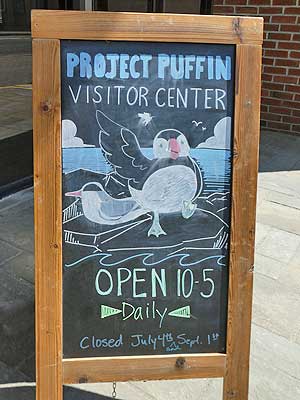
Audubon's Project Puffin manages 13 Maine seabird nesting islands. Each summer, staff live on some of these island to conduct research and monitor the health and growth of seabirds. They also learn about the population levels of the fist that the birds eat, including the effects of pollutants.
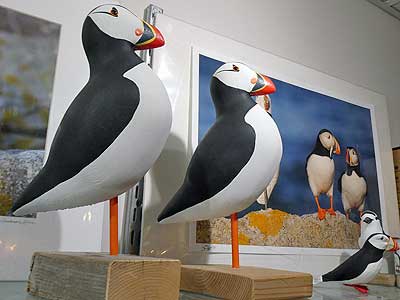
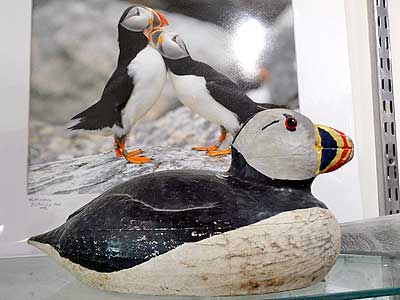
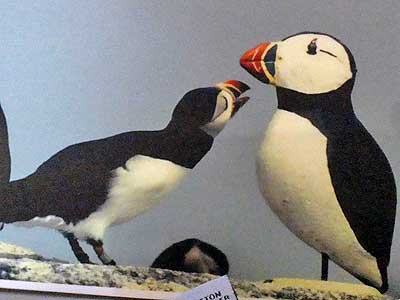
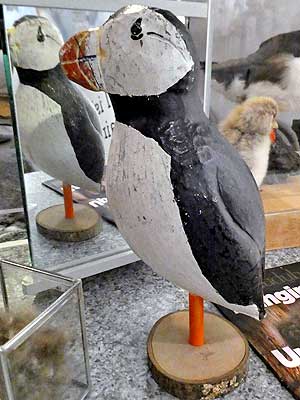
Puffin decoys
In the 1600s, European colonists settled in Maine and spent the next several hundred years decimating all the seabirds of the area, using them for food, eggs, feathers and even fishing bait. By 1901 there were only two puffins left in Maine.
Between 1973 and 1989, nearly 2,000 puffin chicks were moved from Newfoundland (where they were still abundant) back onto some of the islands where they were fed by hand. Decoys encouraged some of them to stay. In 1981, the first puffins began nesting here.
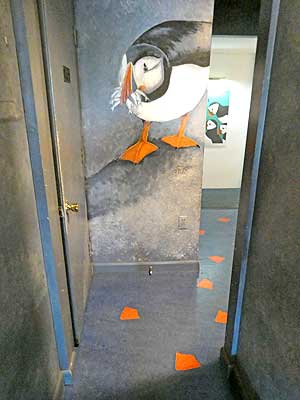
The doorway into the next room
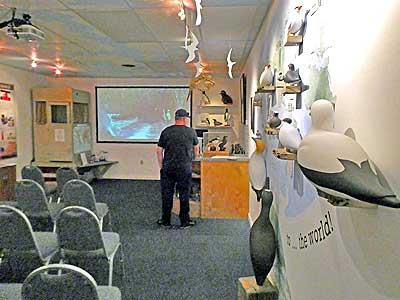
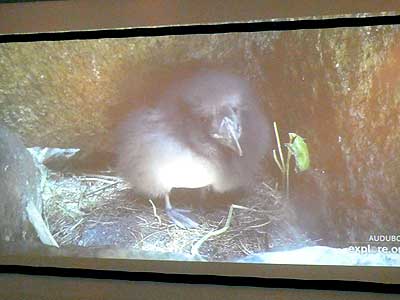
A video of a baby puffin exploring its nest played on a screen on the wall
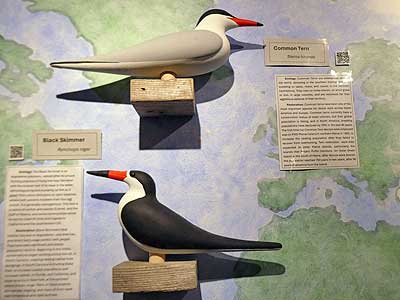
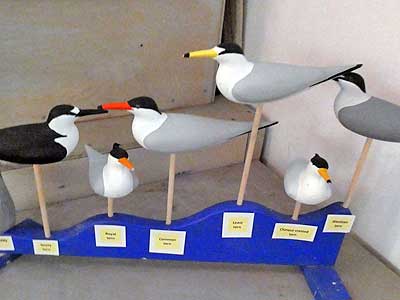
Tern decoys
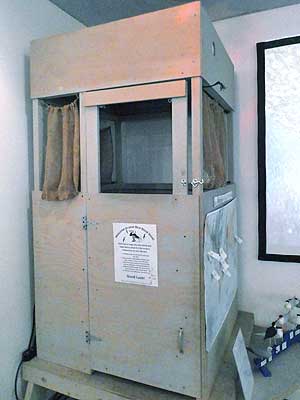
(right) Bird blinds are used by observers for up to six hours a day, sitting in very cramped conditions. There's no electricity for temperature control.
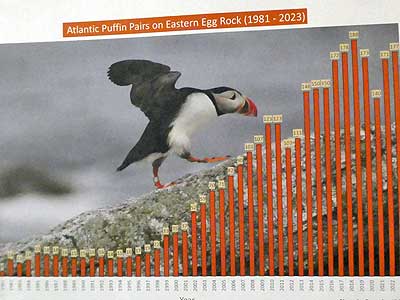
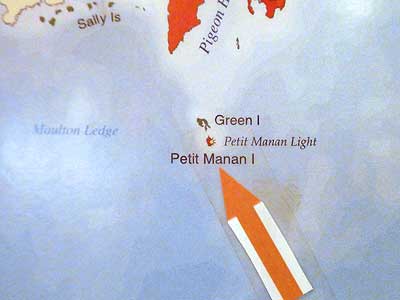
The increase of puffin colonies ... including on Petit Manan where we saw them
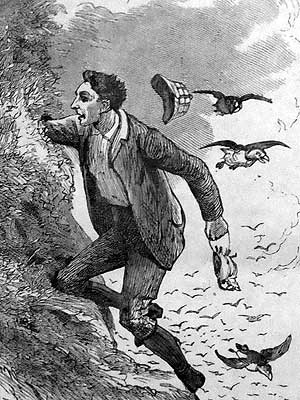
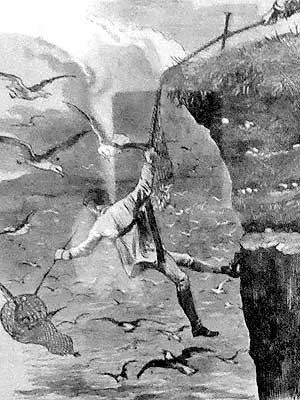
Images from an issue of Harpers Weekly in 1886, depicting how puffins and other seabirds were consider game.
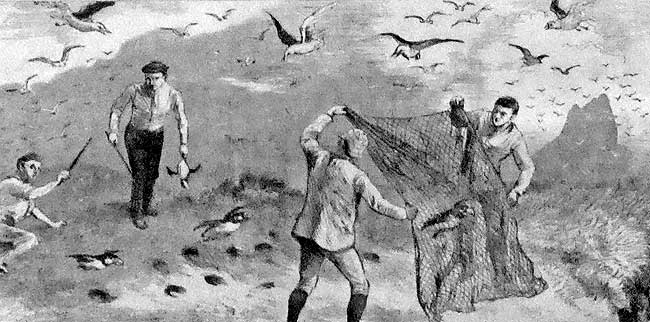
Notice all of the attacking terns, as we saw at Petit Manan as well
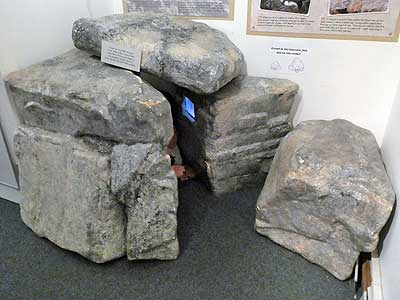
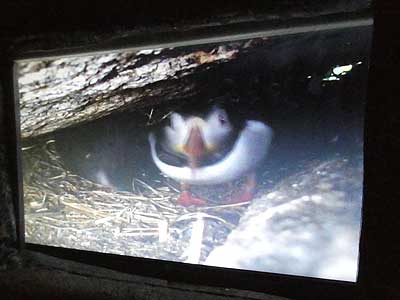
Crawling into a puffin burrow
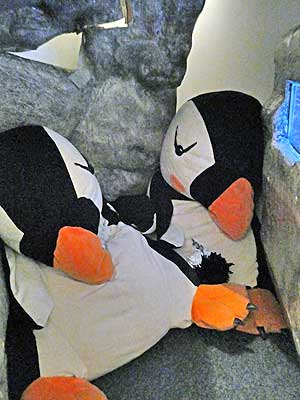
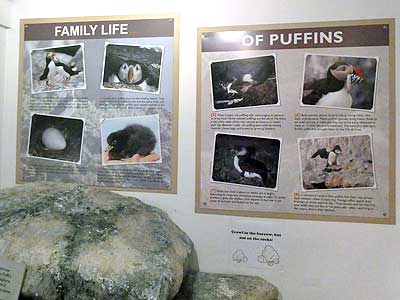
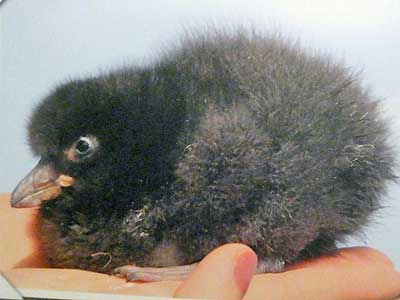
Puffins can live 30 or more years. They usually return to the same burrow with the same mate year after year. In April, they lay one, large egg deep within a rock or soil burrow. The parents take turns incubating the egg for about 6 weeks. It takes the chick (or puffling) about four days to break out of the shell. Newly hatched pufflings are fed about five times per day. Older chicks may get as many as 21 meals per day.
At about 6 weeks old, the young puffin eventually flies out to sea under the cover of darkness to avoid predatory gulls. They will spend their first 2 to 3 years at sea. They usually nest for the first time when they are 5 or 6 years old, often returning to the colony where they hatched.
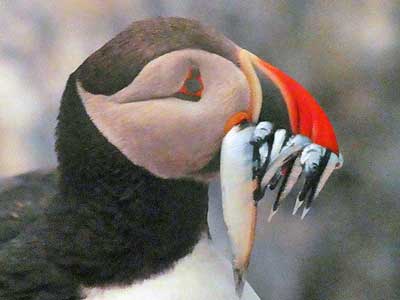
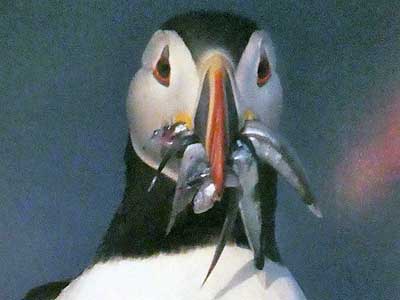
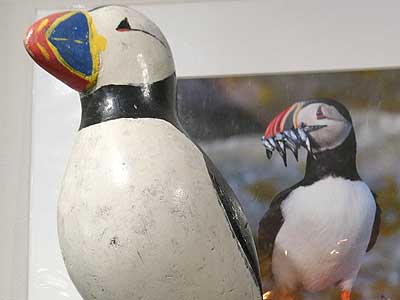
While most puffins tend to carry 3 to 6 small fish in their beak, 15 fish isn't uncommon. The recorded record is 62 fish in one load!
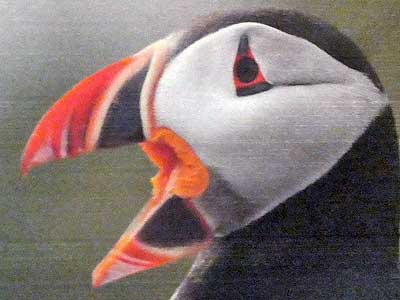
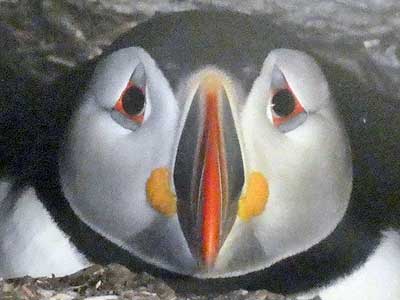
Puffin vision is specialized for underwater hunting, with their eyes angled slightly upward and with a broad visual field, adapted for spotting small fish. Their colorful faces become duller in the winter.
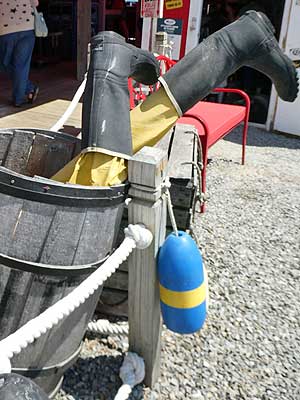
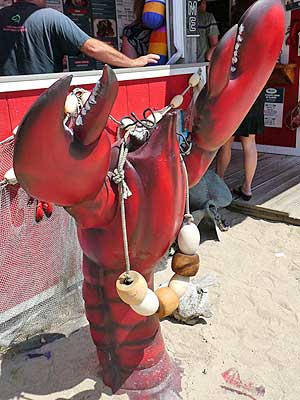
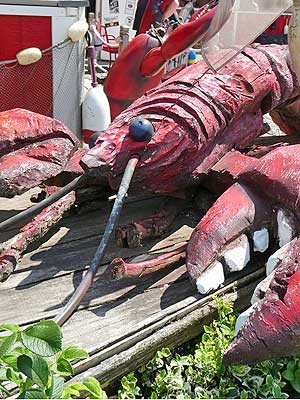
We were long overdue for lunch and luckily spotted this amazing roadside lobster restaurant.


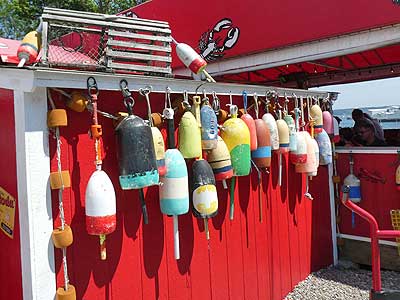

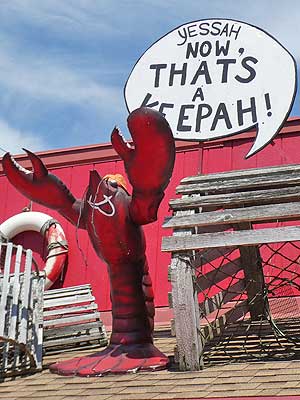





A blueberry lemonade

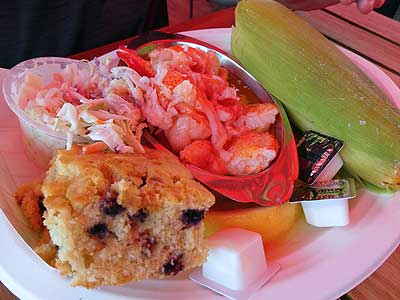
I got the veggie burger ... while Sean got the Lazy Lobster dinner where the lobster was all cut up for you and sauteed in butter. Served with corn, coleslaw and blueberry cornbread
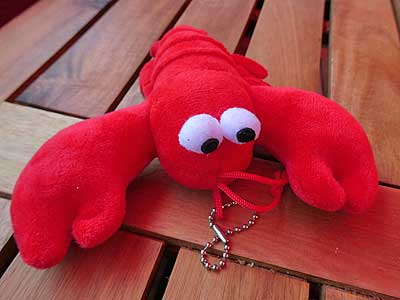
My little souvenir from the trip
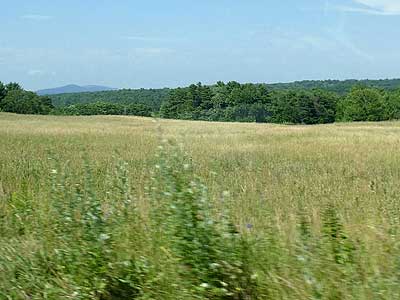
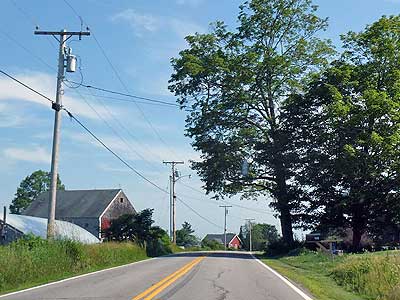
We continued heading south through small towns and countryside towards Portland but made a detour to New Harbor.


return • continue


