Maine has more than 70 lighthouses along over 3,400 miles of rugged coastal shoreline. I was able to visit a copule of them but also took a scenice flight to see many more.
-- BAKER ISLAND LIGHTHOUSE --
Frenchman Bay (Atlantic Ocean)
Built 1828 (rebuilt 1855) • Height 43 feet • 4th order lens
Baker Island is the outermost of the five Cranberry Isles. In 1812, the Gilley family moved to this rocky, unclaimed and unoccupied island. They cleared the land, built a home and eventually had 12 kids. When the government built a lighthouse on the island in 1828, Mr. Gilley became its first keeper. It was a tough life but there was usually plenty of food, including the pigs, sheep, ducks, chickens, and cows they raised. There was also plenty of lobster and fish. However, there was little heat, no fresh water well, and no government boat. The dwellings were also in serious states of decay. Eventually things turned around in 1853 with restorations and upgrades for the future keepers. Most of the island was transferred to the National Park Service in 1958. The lighthouse remained in possession of the Coast Guard until 2011, when it also became part of the Park Service.
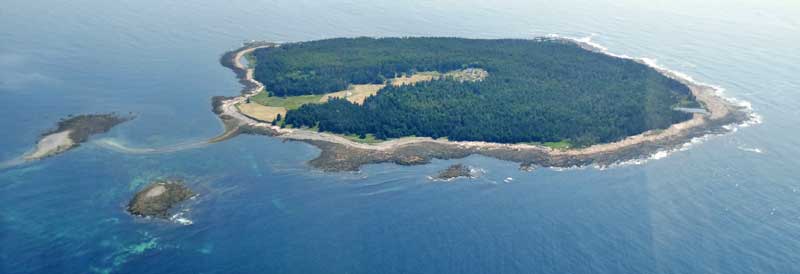
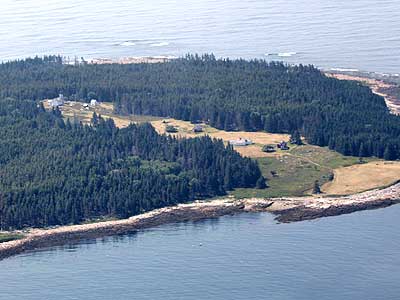
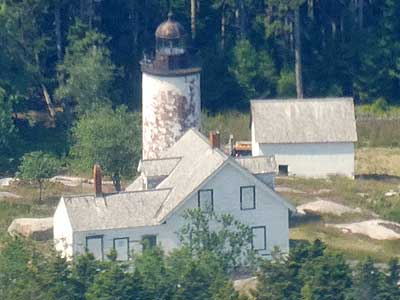
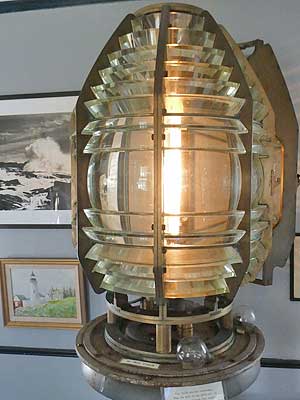
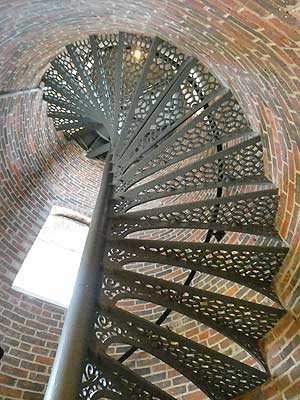
Its old Fresnel lens now rests at the Pemaquid Point Lighthouse museum. Each twilight, the keeper would mount the forty-three spiraling, wrought-iron stairs steps to activate the light and return in the morning to extinguish it.
-- BASS HARBOR LIGHTHOUSE --
Bass Harbor (Atlantic Ocean)
Built 1858 • Height 33 feet • 4th order lens
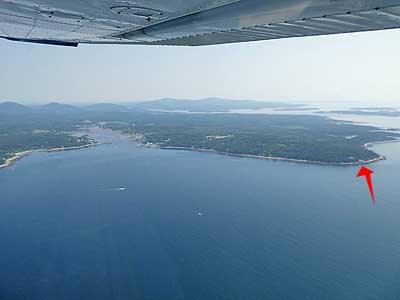
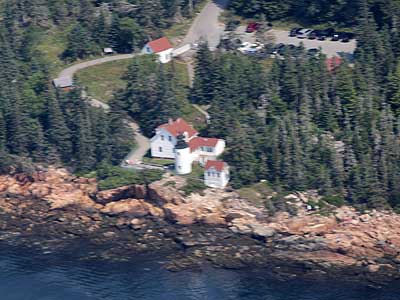
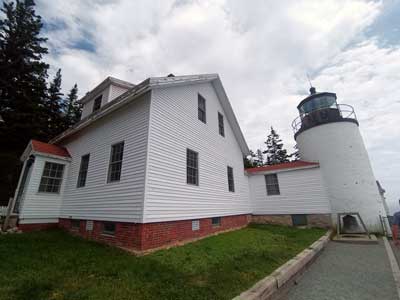
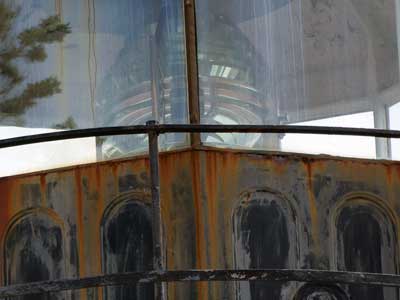
Bass Harbor, located on Mount Desert Island, was constructed in 1858. The tower is only 32 feet high but its light is 56 feet above sea level thanks to the granite cliff on which it stands. Its red light is visible for 13 nautical miles. The longest-serving keeper here was Willis Dolliver, who was in charge from 1894 until 1921. He was 70 years old when he retired. The lighthouse was automated in 1974. In 2020, it became part of Acadia National Park. The original lens installed in the lantern room in 1858 was a 5th order Fresnel lens. It was a solid or fixed red light. In 1902, it was upgraded to the larger 4th order lens where the red lights occults (darkens) every four seconds.
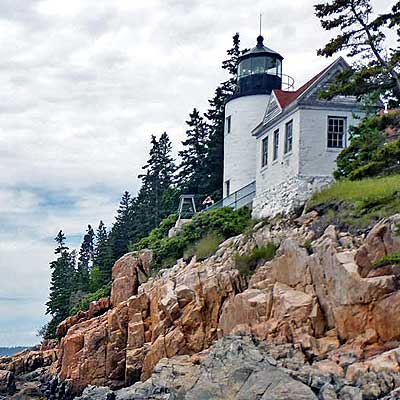
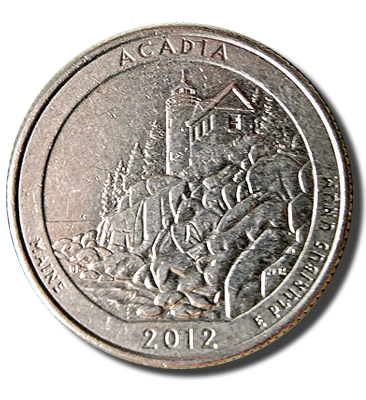
In 2012, the lighthouse was featured as part of the US Mint’s America the Beautiful Quarters Program.
-- BEAR ISLAND LIGHTHOUSE --
Somes Sound (Atlantic Ocean)
Built 1839 • Height 31 feet • 5th order lens
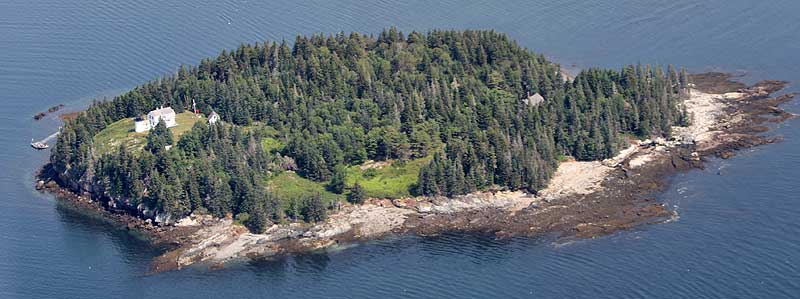
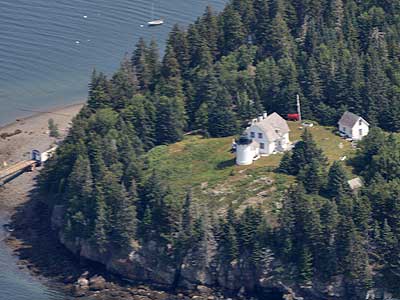
Bear Island might have originally been named Bare Island due to a lack of trees. It is one of the Cranberry Isles. The lighthouse was built in 1839, serving the entrances of Northeast and Southwest harbors. The lighthouse was severely damaged by a fire in 1852 but rebuilt the following year. There was even an aerial tramway that could haul supplies from the wharf to the top of the island. After 1981, the deteriorated light was deactivated and replaced by two lighted bell buoys anchored offshore. It became owned by the National Park Service in 1987.
-- BURNT COAT HARBOR LIGHTHOUSE --
Burnt Coat Harbor (Atlantic Ocean)
Built 1872 • Height 33 feet • 4th order lens
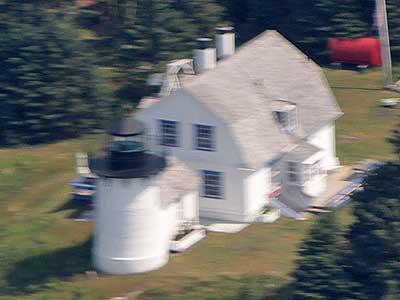
The Burnt Coat Harbor Lighthouse on Swans Island was first lit in 1872. These early lights used whale oil or lard oil (which had a tendency to congeal in the cold winter weather). Fortunately, kerosene became the standard in 1877. The light was automated in 1975. In 1994, it was transferred from the Coast Guard to the local town government. It required a great amount of restoration which began in 2006. The origin of the name is still unclear. Some say it comes from a Revolutionary War soldier who burned his coat as a signal or sign of rebellion. Others day it comes from Samuel de Champlain, who called the area Brule-Cote (or Burnt Coast), presumably because of the numerous fires by Native Americans.
-- DEER ISLAND THOROFARE LIGHTHOUSE --
East Penobscot Bay (Atlantic Ocean)
Built 1857 • Height 25 feet • 4th order lens
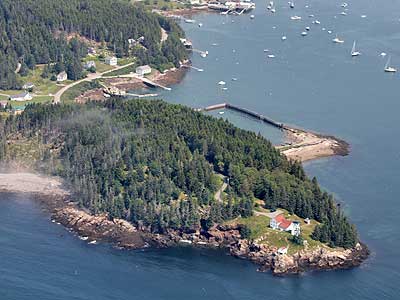
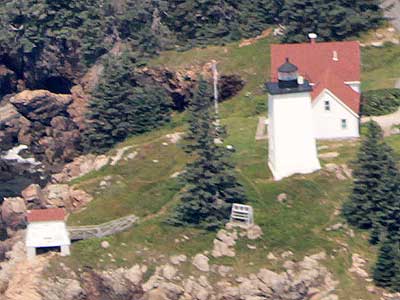
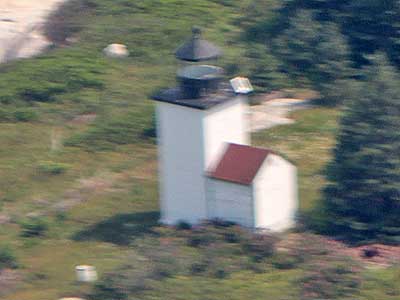
The Deer Island Thorofare is a narrow passage that runs between Deer Isle and numerous islands and ledges. In 1856, a plot of land on Mark Island was purchased from the Thurlow family so a lighthouse could be built. The lens was placed in the tower in 1858 and could be seen from up to 12 miles away. In 1958, a battery charger in the basement exploded, causing the keeper's house to burn down, but the light tower survived. Since traffic in the area had decreased, the Coast Guard decided to automate the station rather than rebuild the dwelling.
-- DICE HEAD LIGHTHOUSE --
Penobscot River
Built 1829 • Height 42 feet • 4th order lens
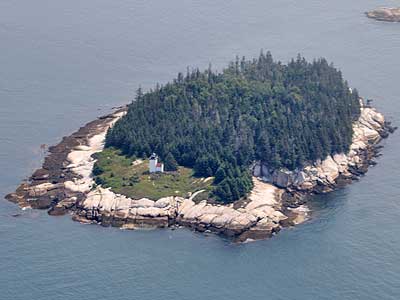
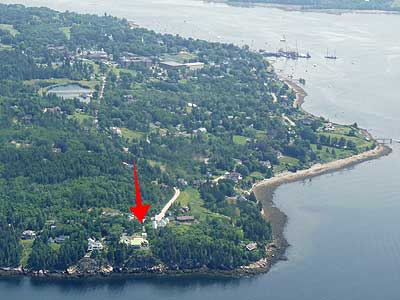
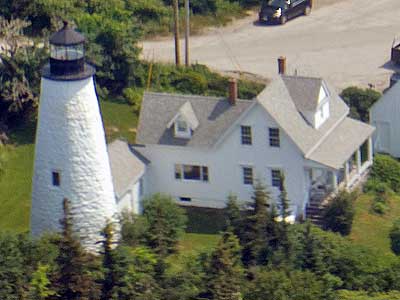
Dice Head Lighthouse (also sometimes written as Dyce Head) was completed in 1828 to protect the growing shipping industry of Castine. The Dyce family formerly owned the site selected for the lighthouse. It was electrified and automated in 1935 and decommissioned in 1937. The light was moved to a nearby structure and the tower was eventually turned over to the town in 1956. In 2007, a microburst knocked over the light structure and residents suggested that rather than rebuilt it, the Coast Guard install a light in lighthouse again. So in 2008, after 72 year of darkness, the Dice Head Lighthouse shone again.
-- EAGLE ISLAND LIGHT --
East Penobscot Bay (Atlantic Ocean)
Built 1838 • Height 30 feet • 4th order lens
The Eagle Island Light, completed in 1838, was needed to guide ships going to and from Bangor, which was a busy lumber port. In 1857, a larger, fourth-order Fresnel lens was installed. Shining from 106 feet above sea level, it was visible for 16.5 miles. Keepers had to row about two miles to Deer Isle to get supplies, and upon returning, the supplies had to be hauled up a steep and narrow trail. In 1894, a stairway of 76 steps was built to make things a bit easier. Keepers also had to buy their own uniforms and food for their families, all on a meager salary. In 1963, the Coast Guard decided to burn down the buildings (other than the lighthouse and bell tower) because of an increase of vandalism at other abandoned stations. While attempting to remove the fog bell, it slipped and fell off the cliff into the water. They just left it. Years later, a local fisherman noticed it sitting in the deep water and managed to retrieve it.
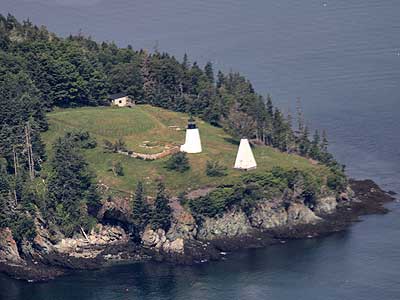
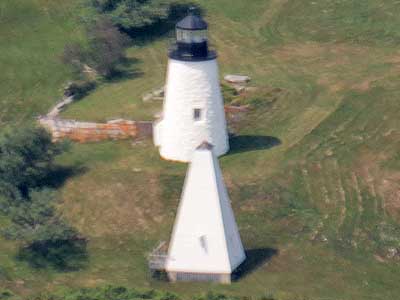
Lighthouse, fog bell, and ruins of the keeper's house
-- EGG ROCK LIGHTHOUSE --
Frenchman Bay (Atlantic Ocean)
Built 1875 • Height 39 feet • 5th order lens
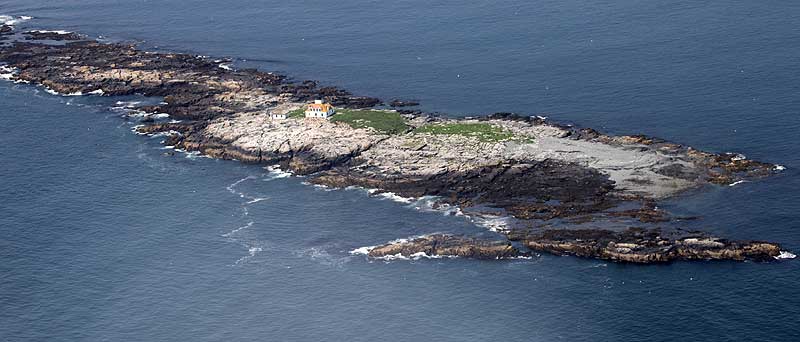
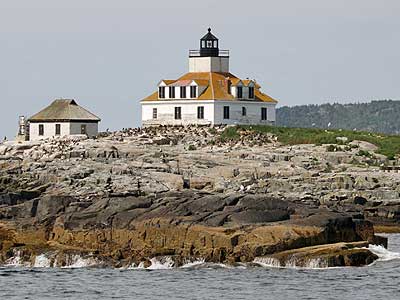
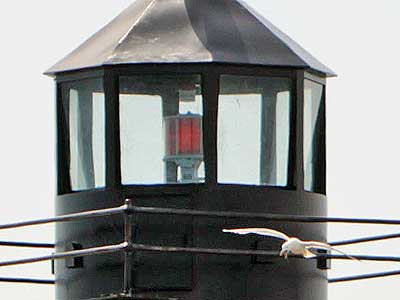
Egg Rock (also once known as Gull Island) got its name for the bounty of nesting seabird eggs that could be collected there. Once the lighthouse was built in 1875, the birds left. Since 1998, the island has been a protected bird sanctuary. A lighthouse was needed here due to the increase in seasonal ferry traffic and fog was often a problem (the foghorn was operated for 348 hours in the month of July 1906 alone). A few months after being activated, a huge storm washed over the rock... smashing some windows, flooding the keeper's house, carrying away the fuel shed and dragging the bell tower some 30 feet. Subsequent storms in 1887, 1900 and 1908 swept away more things (such as the outhouse) and even moved rocks weighing up to 30 tons. It was automated in 1976 and converted to solar power in 1999.
-- FORT POINT LIGHTHOUSE --
Penobscot River
Built 1836 • Height 31 feet • 4th order lens
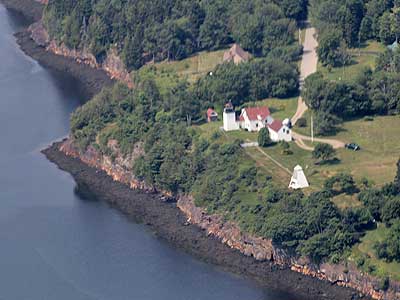
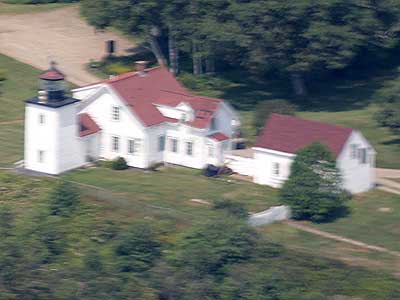
Fort Point Lighthouse was built in 1834 at the entrance of Penobscot Bay on Fort Point to guide ships hauling potatoes and timber from the area. By 1855, the station was already falling apart and had to be rebuilt. It was electrified in 1950 and closed in 1988. Today it is one of nine lighthouses in Maine still using a historic Fresnel Lens.
-- PEMAQUID POINT LIGHTHOUSE --
Muscongus Bay and Johns Bay (Atlantic Ocean)
Built 1827 • Height 38 feet • 4th order lens
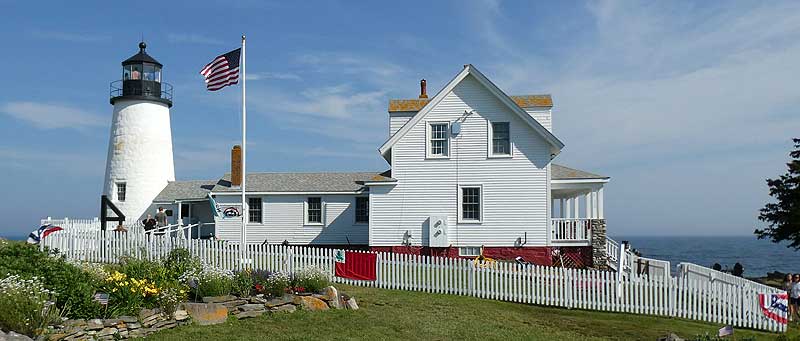
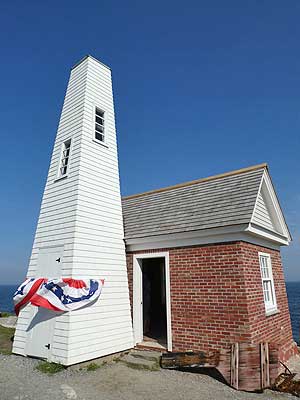
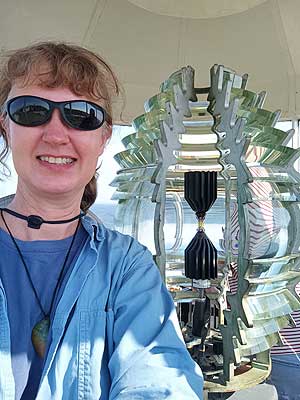
The Pemaquid Point Lighthouse first went into service in 1827. After a mere 8 years, a replacement tower was required due to construction mistakes. In 1857, a fourth-order Fresnel lens was installed. In 1934, it was one of the first in Maine to convert to automatic acetylene gas operation. The brick bell house was built in 1897 to contain two steam engines which operated the fog bell. These were replaced two years later by a weight-powered Stevens Striking Machine and a wooden tower (to accommodate the weights which activated the striker).
-- PETIT MANAN LIGHTHOUSE --
Atlantic Ocean
Built 1816 (rebuilt 1855) • Height 118 feet • 2nd order lens
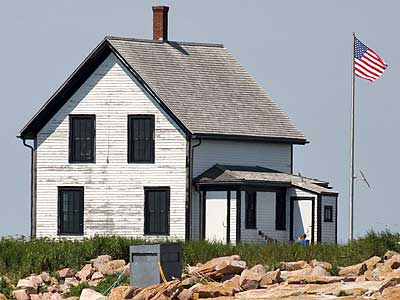
The first Petit Manan lighthouse was built in 1816. It was rebuilt in 1855 with a 119-foot-tall tower, making it the second tallest lighthouse in Maine. Following its electrification in 1938, it became the second brightest light in Maine. It became automated in 1972, and in 1974, the Coast Guard ceded the island to the Fish and Wildlife Service in order to protect the island's seabird population.

-- PORTLAND HEAD LIGHTHOUSE --
Casco Bay (Atlantic Ocean)
Built 1791 (oldest in Maine, first by US government) • Height 80 feet • 4th order lens
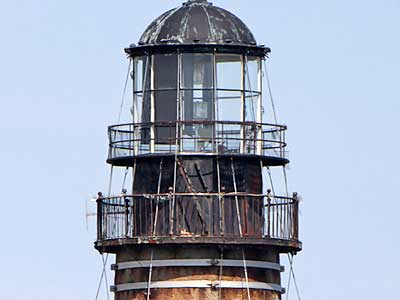
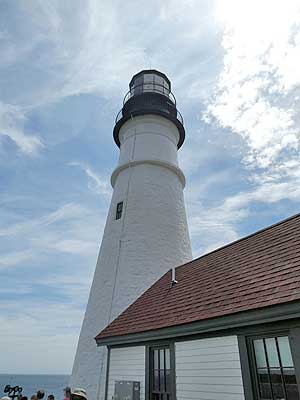
The Portland Head Lighthouse was the first lighthouse completed by the US government. It was commissioned by President George Washington in 1791. To keep prices low, he asked that the tower be built from local rubblestone which could be hauled in by oxen. Originally the tower was to be 58 feet high, but was increased to 72 feet for visibility reasons. The light was powered by sixteen whale-oil lamps. During one cold winter, ice on the lantern glass froze so thick that it had to be melted off. After a fatal shipwreck in 1864, the height of the lighthouse was raised 20 feet and a second-order Fresnel lens was installed. The light was kept dark from June 1942 through June 1945 to avoid aiding German submarines.
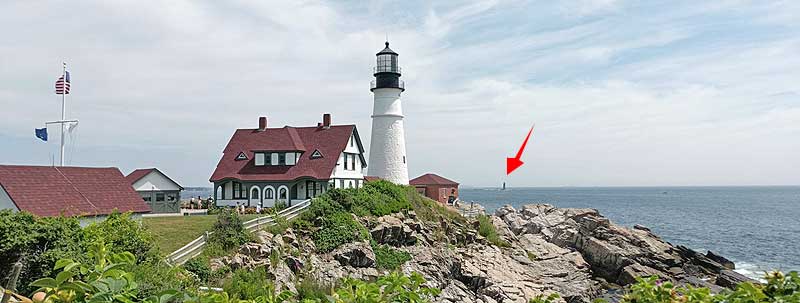
Portland Head Lighthouse with the Ram Island Ledge Light in the background
-- PROSPECT HARBOR LIGHTHOUSE --
Prospect Harbor (Atlantic Ocean)
Built 1849 (rebuilt 1891) • Height 38 feet • 5th order lens
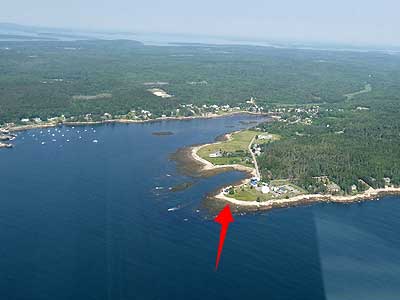
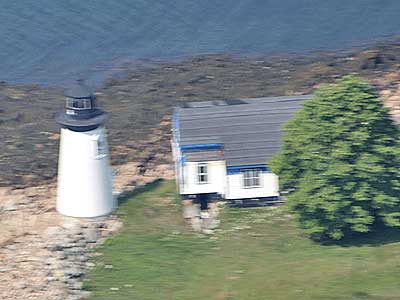
Built in 1849, the Prospect Harbor lighthouse was discontinued in 1859 after it was decided that the harbor did not justify the cost of its maintenance, but it was re-established a decade later. The old structures began being rebuilt in 1891. The light was automated in 1934. It currently stands on the grounds of a US Navy satellite operations station.
-- PUMPKIN ISLAND LIGHTHOUSE --
Eggemoggin Reach Channel (Atlantic Ocean)
Built 1854 • Height 25 feet • 5th order lens
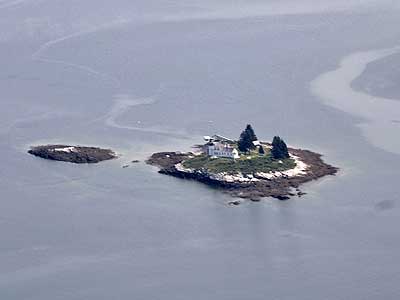
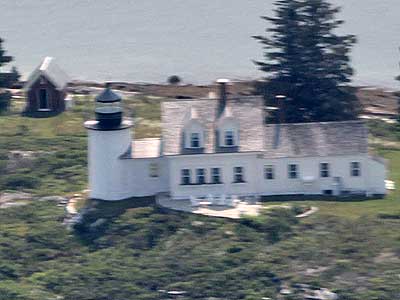
Pumpkin Island is less than two acres in size. The lighthouse was first lit in 1855 and decommissioned in 1933. It was among those sold by the government into private hands. It was purchased by the same man who bought the Winter Harbor Lighthouse. It has been sold several times since then.
-- RAM ISLAND LEDGE LIGHTHOUSE --
Casco Bay (Atlantic Ocean)
Built 1905 • Height 72 feet • 3rd order lens
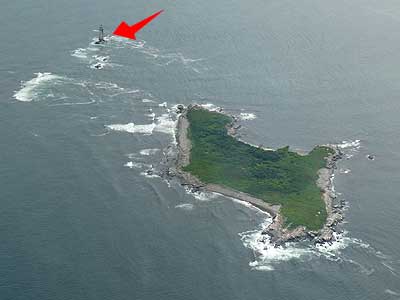
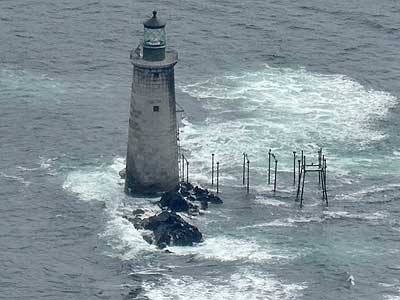
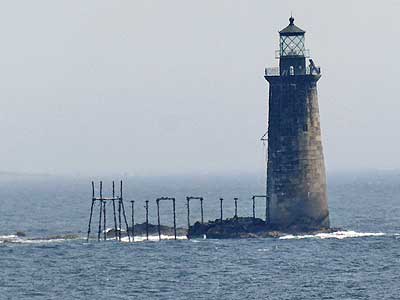
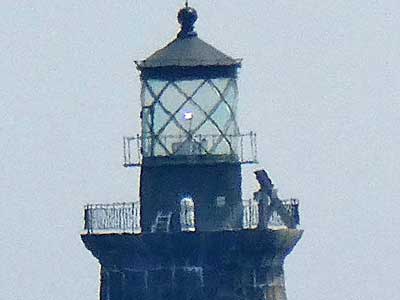
Ram Island Ledge marks the northern entrance into Portland’s outer harbor. It has long been one of the area's most dangerous spots due to a partially submerged strip of rock at high tide. In 1903, the foundation rock was leveled and work on the lighthouse began. The 77-foot tall tower received its third-order Fresnel lens in 1905. It revolved in a bath of mercury to produce a double-flash every six seconds. In 1958, an underwater power cable allowed it to be automated, and in 2000, it was converted to solar power in 2000.. The original Fresnel lens has been replaced by a modern 300mm optic, showing two white flashes every six seconds.
-- SPRING POINT LEDGE LIGHT --
Casco Bay (Atlantic Ocean)
Built 1897 • Height 54 feet • 5th order lens
Caisson lighthouses (also called a sparkplug lighthouses or bug lights) were developed in the late 1800's as a cheaper alternative to screwpile lighthouses. They were more efficient, sturdier and could withstand harsh weather. They were mostly made of cast iron.
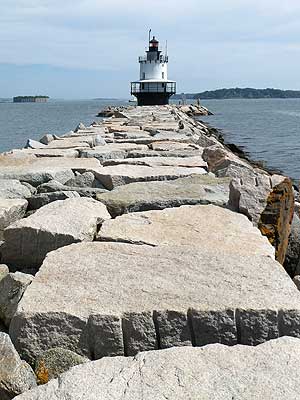
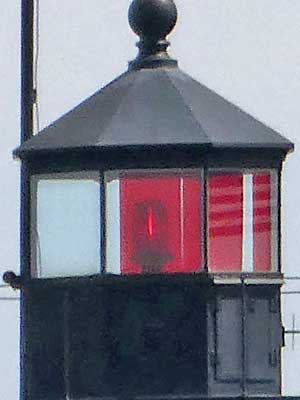
The Spring Point Ledge Light was built in 1897 as an offshore light. It was connected to the mainland in 1951 by a 900-foot-long breakwater. It was electrified in 1934 and automated in 1960.
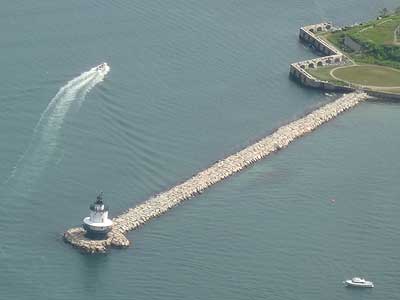
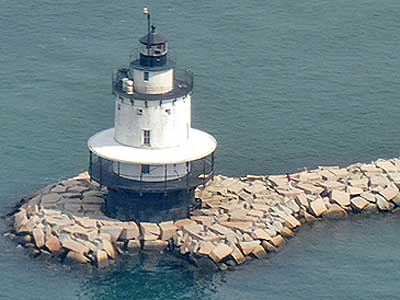
The Spring Point Ledge Light and Fort Preble
-- WINTER HARBOR LIGHTHOUSE --
Frenchman Bay (Atlantic Ocean)
Built 1956 • Height 19 feet • 5th order lens
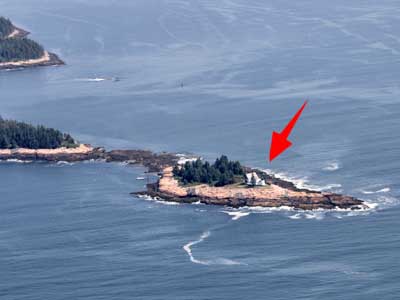
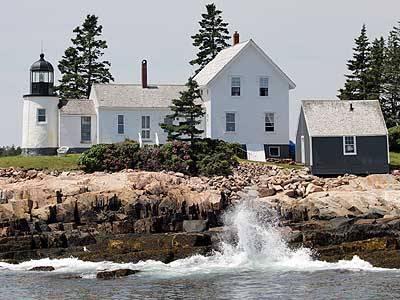
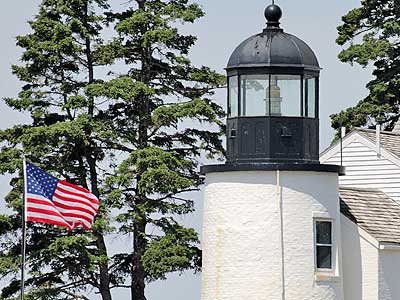
The Winter Harbor Lighthouse on Mark Island (there are at least a dozen Mark Islands in Maine) was built in 1857 to guide ships away from nearby treacherous ledges. In 1933, however, its service as a navigational guide ended, having been replaced by a lighted bell buoy. In 1934, it was announced that nine Maine lighthouses were being sold. This was one of them. It was auctioned off for a mere $552. It passed through the hands of many owners over the decades and was often abandoned and left to fall into disrepair. A light was finally returned to the repaired tower in 1996. It had to be orange, however, to indicate that it was private and not an official US Coast Guard light.