CRUISES (Day 7 - part 4)
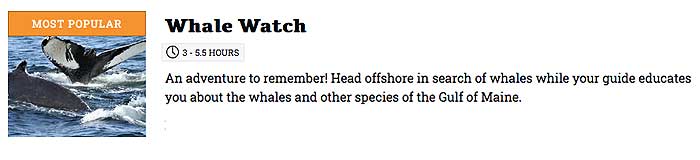
At 2:30, we headed back to the dock for our next cruise.... whale watching!
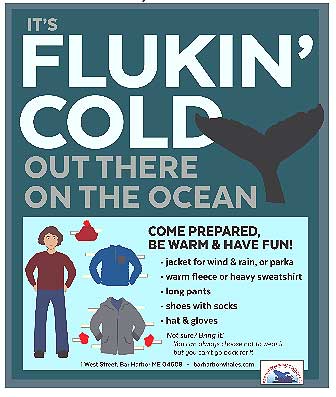
We wore everything we had!
At first we found a nice place to sit outside, but as we headed out into the open water, it got very very cold! Plus, it was taking a long time to spot any whales so we had to go farther and farther out... all the way into Canadian waters. So we ended up sitting inside most of the time, coming out only when whales were spotted. In theory there were Minke and Fin whales out here as well, but we only saw several Humpback whales.
At first the sun was out, but once the clouds moved in, the temperature dropped even more. The wind howled through the doors inside, and icy spray from the swells soaked the decks. A cup of hot chocolate on the ride back helped keep us warm.
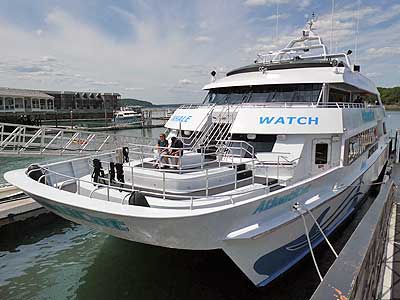
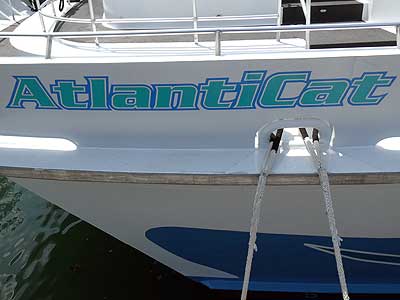
The Alanticat
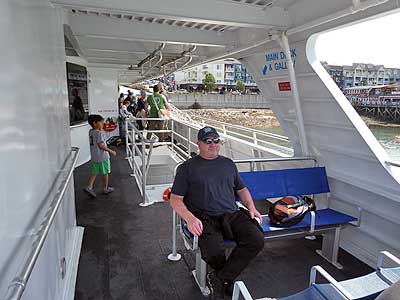
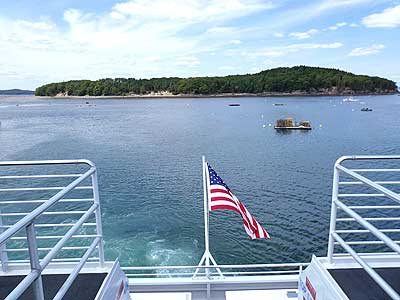
Our outside seats... and view
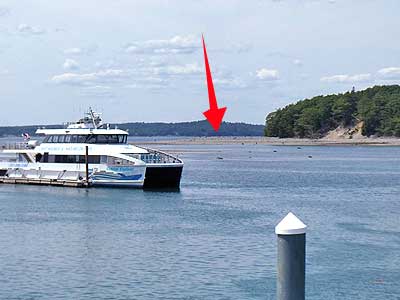
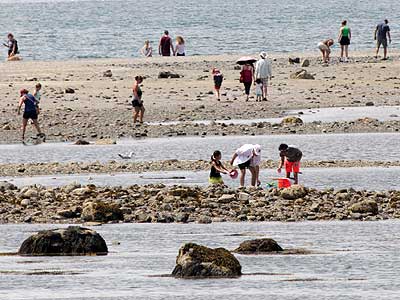
The tide was low so people wandered about along the land bridge to Bar Island. The tide can change the water levels by around 15 feet.
Heading out...
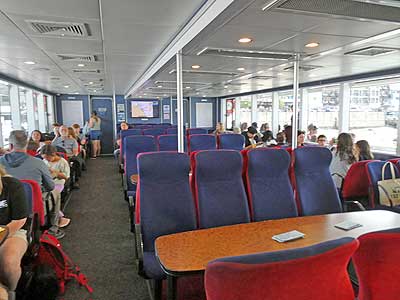
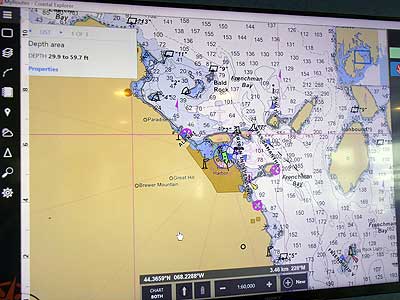
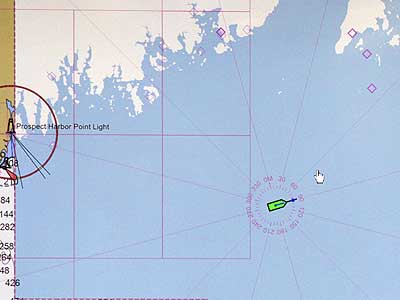
Inside ... with a map of our progress
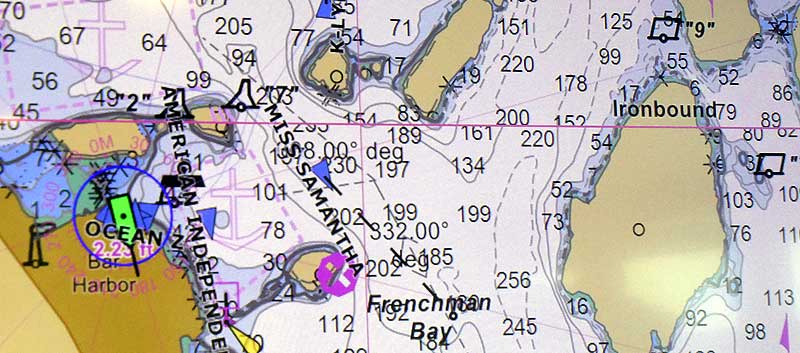
Bar Harbor
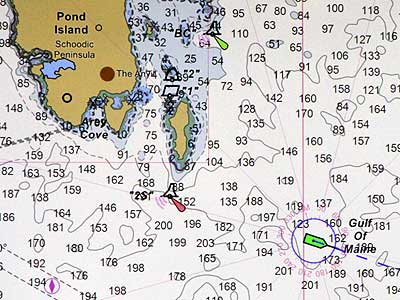
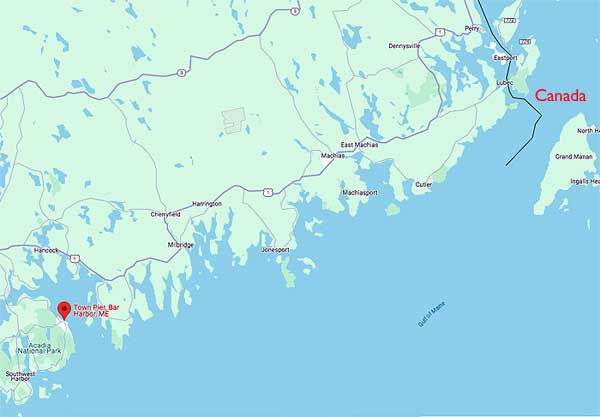
Our path took us 15 - 30 miles offshore in the Gulf of Maine. The Gulf is around 200 - 400 feet deep (getting as deep as 650 feet in some places). In spite of how rough it felt, it is relatively protected when compared to the Atlantic Ocean.

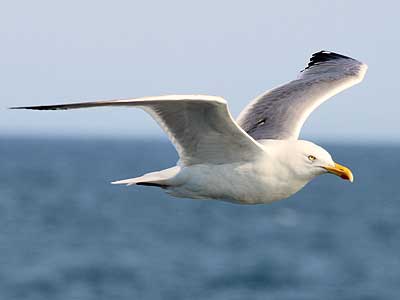
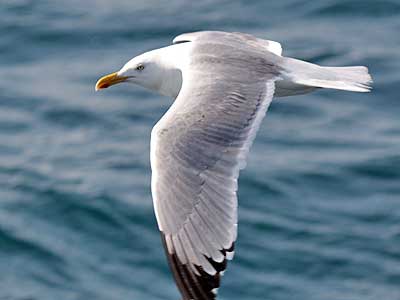
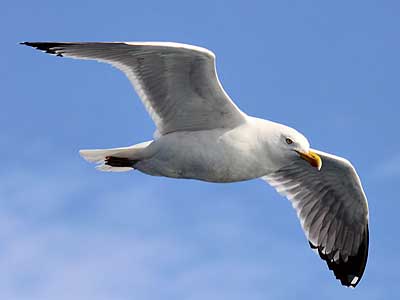
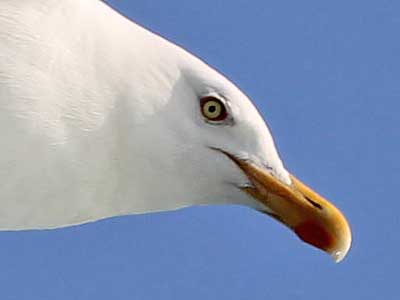
Getting the evil eye from a passing gull!
Whales! Currents bring in cold water down from the Arctic by means of the Northeast Channel. This provides phytoplankton nutrients, making this area a good feeding ground for whales. There's no food available in their calving grounds in tropical water.
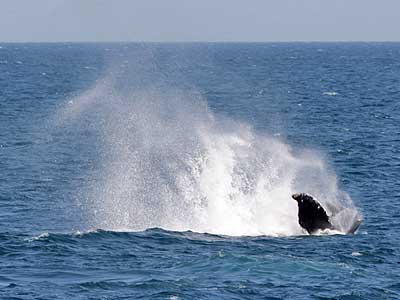
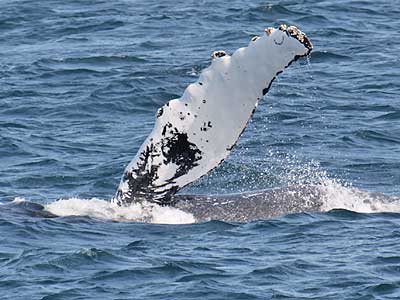
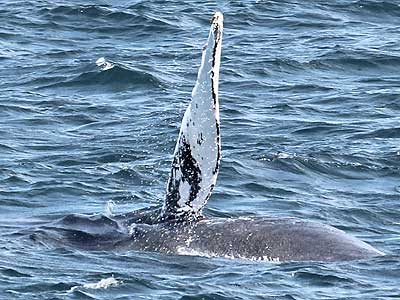
A side float
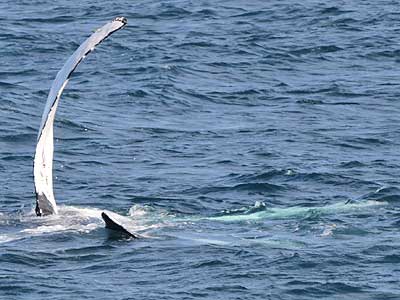
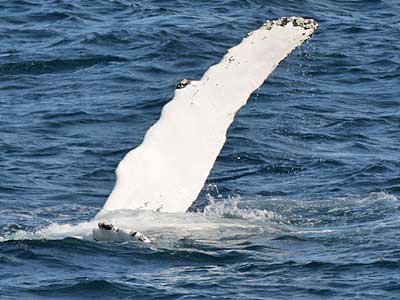
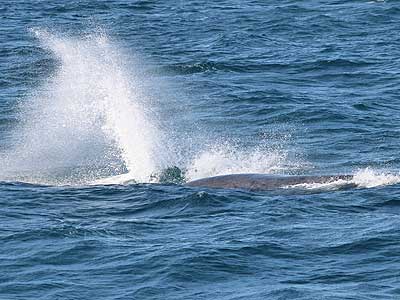
A back float
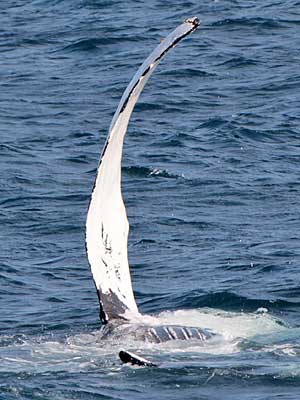
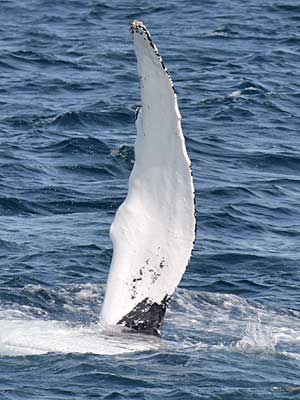
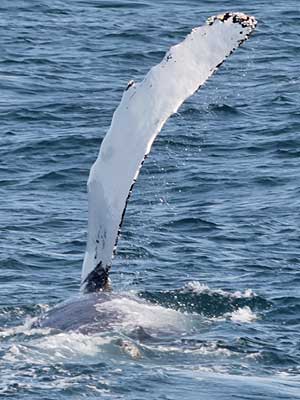
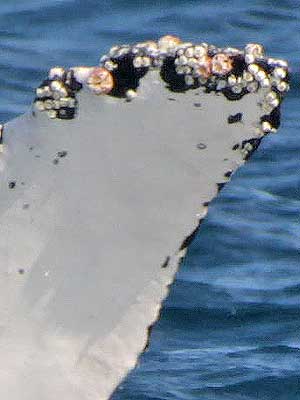
Barnacle larvae are free-swimming plankton that find whales through chemical cues. Different barnacle species live on different whale species. They attach to their skin and grow into heavy, bumpy patches. As the whale swims, water carries food (plankton) to the barnacles. The barnacles often fall off during migration or at the breeding grounds, allowing for new ones to attach and grow.
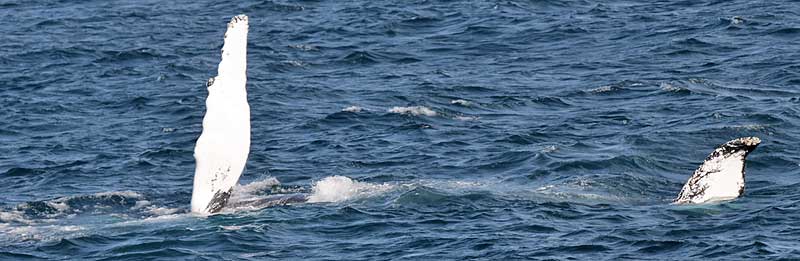
Humpbacks get to be 30 - 50 feet long.
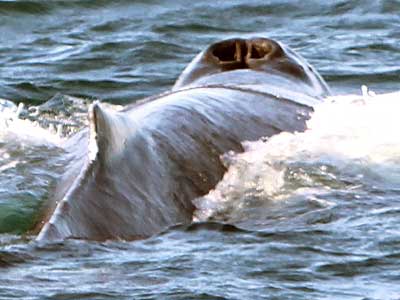
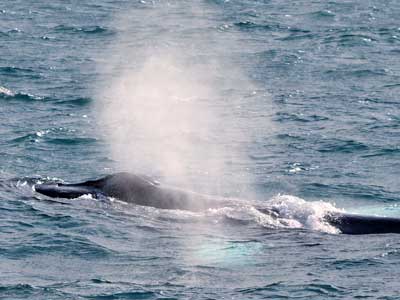
Whales breathe through a blowhole. The mist is formed from their warm breath hitting the cool air.
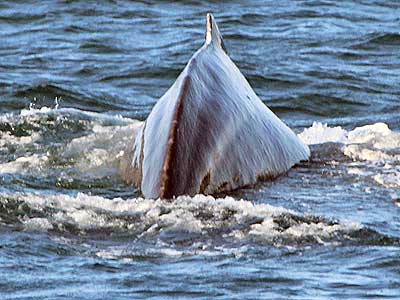
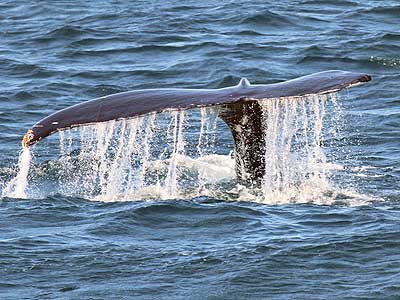
When whales do a deep dive, they arch their bodies downward, dragging their tails behind them.
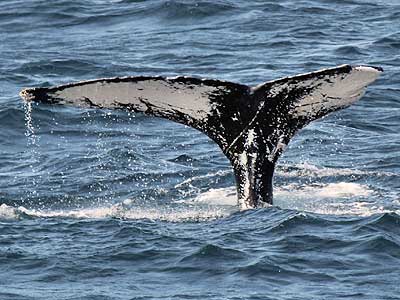
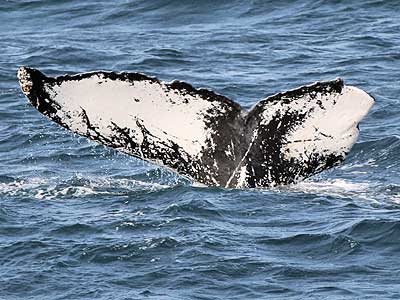
Disappearing beneath the waves
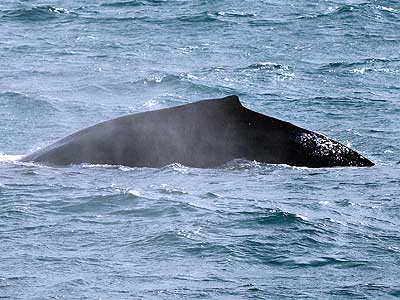
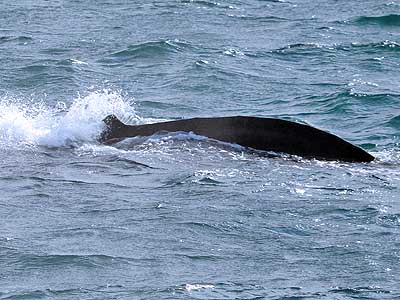
The start of another deep dive
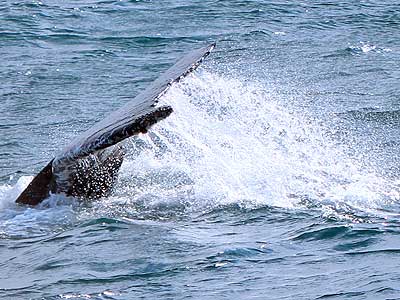
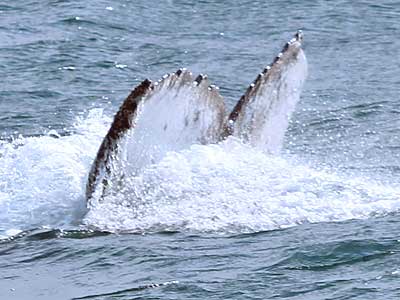
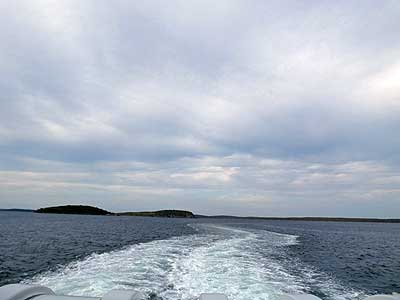
We were about 60 miles out when we turned back. It was a 2-hour rocky ride back to Bar Harbor.
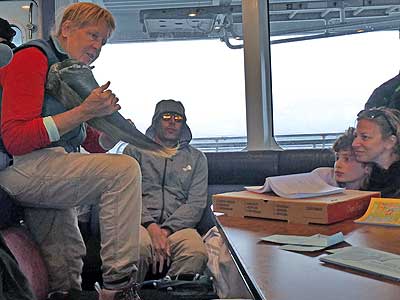
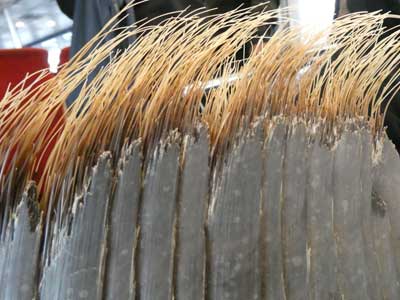
Another naturalist shows us some whale baleen. This filters food out of the water.
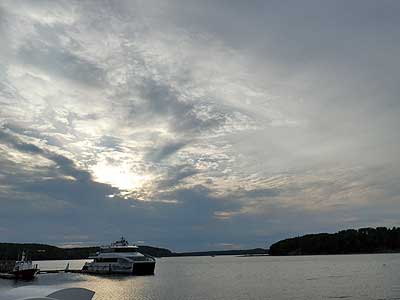
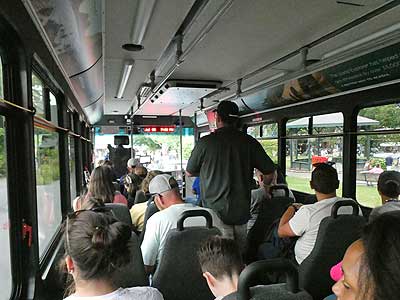
We caught the 7:30 pm shuttle back to the visitor center where we grabbed the car and headed to the hotel. On the way, we picked up some quesadillas from Chipotle to eat in the room.
return • continue


