COASTAL DRIVE (Day 8 - part 1)
We checked out of our hotel and began our 2-day drive back to Portland along the coast. Our first stop was the town of Prospect.
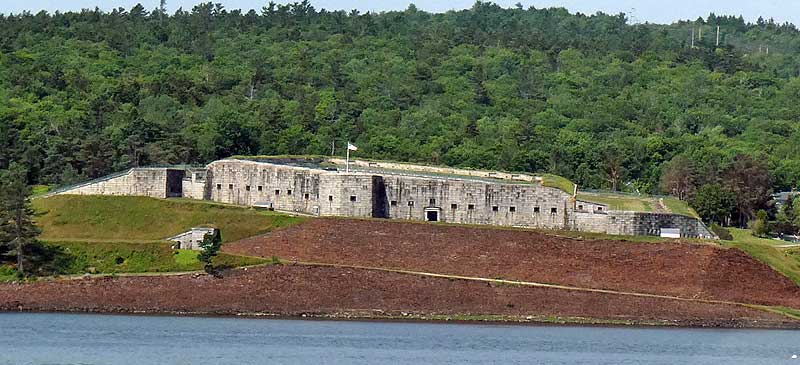
A view of Fort Knox from across the Penobscot River
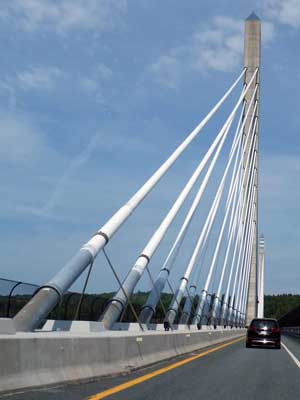
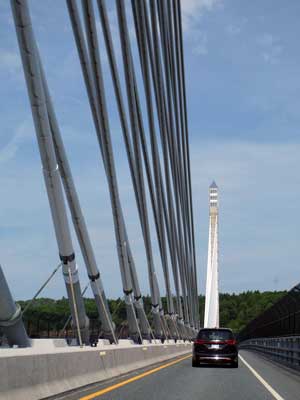
Crossing the Penobscot Narrows Bridge
On the other side of the bridge, we pulled into an overlook.
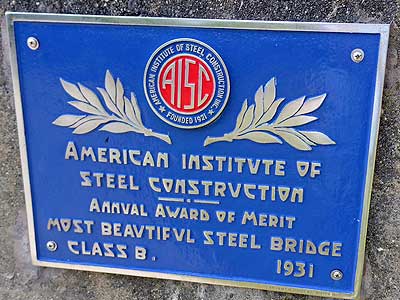
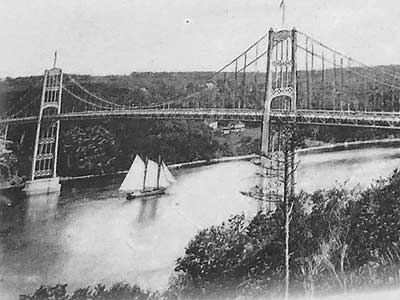
The old Waldo-Hancock Bridge
The Waldo-Hancock Bridge, built in 1931, was the first bridge to use pre-stressed wire rope strand cables and was extremely modern for its time. It was claimed to be the Most Beautiful Steel Bridge and its span was more than twice as long as any other bridge in Maine. In 2003 during a major overhaul, it was discovered that the cables were too corroded to save and the bridge would have to be replaced. In 2006, the Penobscot Narrows Bridge became the first cable-stay bridge in Maine. It includes the tallest public bridge observatory in the world.
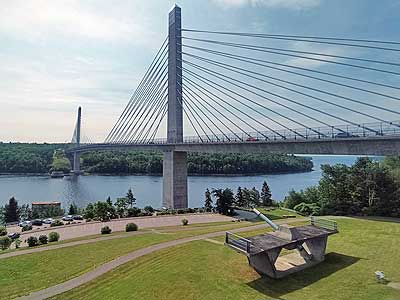
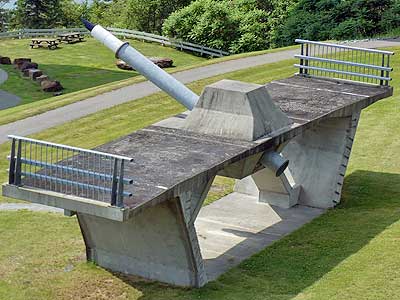
The Penobscot Narrows Bridge ... with a section of the cables
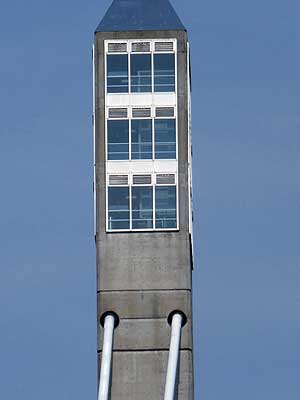
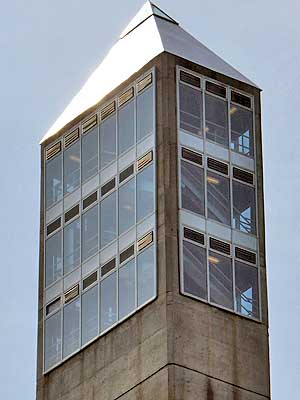
The observatory
We continued on to the nearby Fort Knox Historic Site.
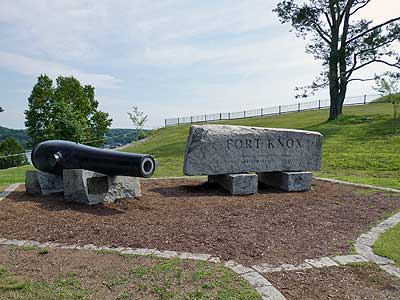
We started with the visitor center...
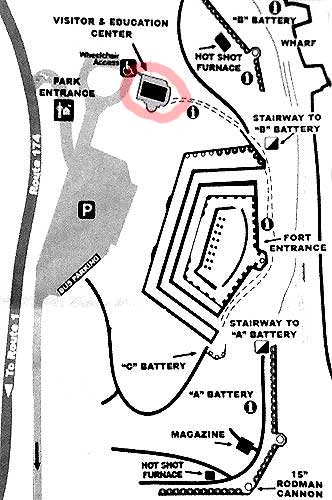
Overview map
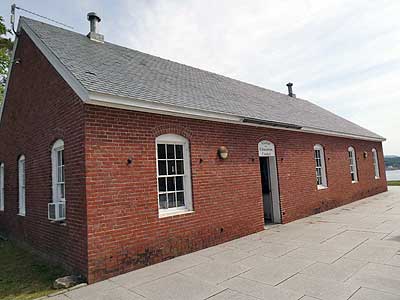
The visitor center
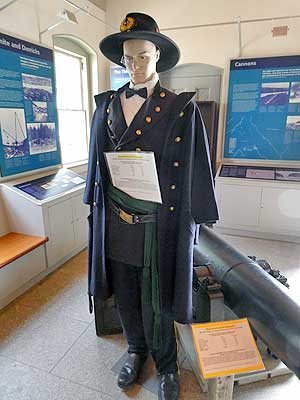
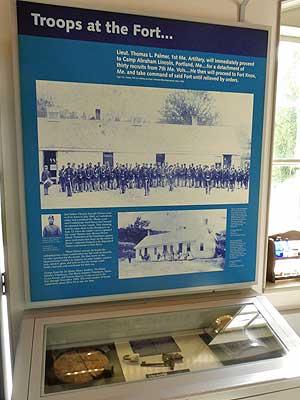
A Civil War soldier ... many signs and exhibits
In 1779 and 1814, England invaded the Penobscot River valley to take control of eastern Maine. At the time, Maine's border with New Brunswick was still in dispute. Thanks to the area's wealth in timber, its protection became of utmost importance. Forts were recommended at Portland and at the mouths of major rivers. By securing these areas, Americans could protect coastal trade and provide safe havens for navy and private vessels.
Fort Knox, named after Revolutionary War Major General Henry Knox, rose on the banks of the Penobscot River over a 25 year period beginning in 1844. It was part of a federal system of forts (called the Third System, since there had been two more before it) to project the nation's major rivers and harbors. A total of some 40 new forts were built.
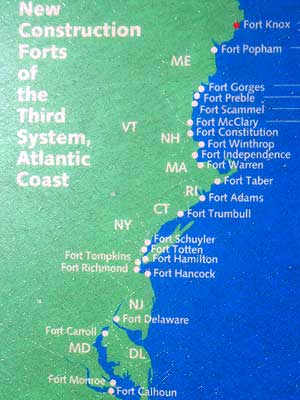
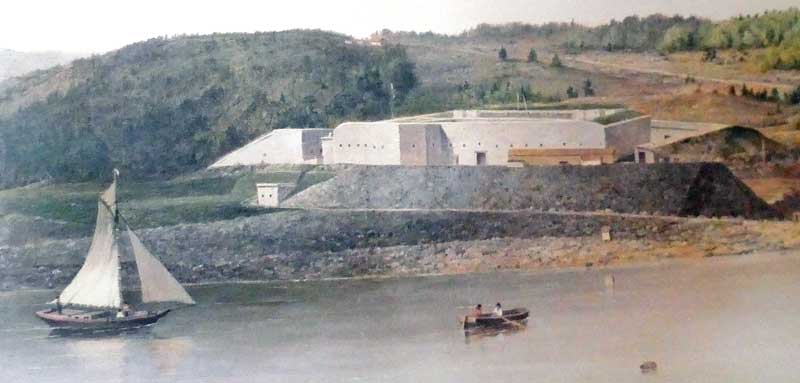
Protector of the Penobscot ... A fort to defend the Narrows... Fort Knox near the end of its construction, circa 1870
Designed to defend against cannon fire from attacking ships, these were massive, strong and heavily armed. They had a tier of casemates (large rooms with vaulted ceilings) with cannons along the waterfront wall and another level of cannon platforms on the roof. Ditches around the fort protected it from land attacks. Rifle ports allowed for crossfire into the ditch. Cannon ports were equipped with iron shutters which could be opened and then slammed shut after firing. Fort Knox was built on a slope, leading to an even more complicated design. However, enemy ships never appeared on the river here during this time and many of the cannon emplacements remained empty.
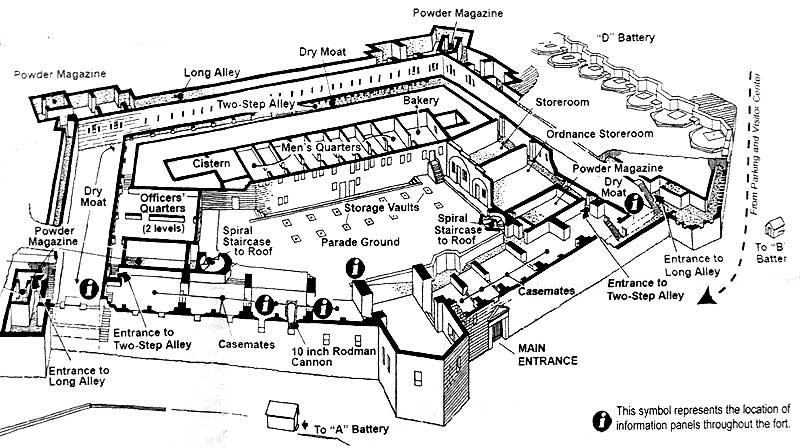
Fort Knox
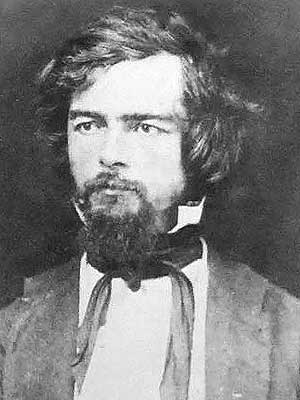
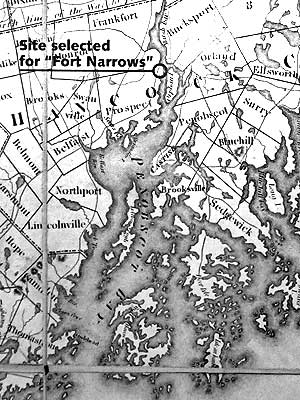
25-year-old Isaac Stevens was placed in charge of the project. At first, his orders were simply to select the site, but he quickly got assigned to its construction.
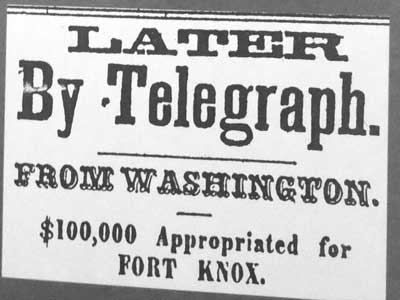
Funding for construction was sporadic during the 1850s, with the limited funds going to fortification in other states. With the outbreak of the Civil War in 1861, several of the Maine coastal forts were not complete and had no cannons... including Fort Knox. Even though Confederate ships were a threat, fears centered around the British, who were gathering troops in eastern Canada and appeared to be joining forces with the South. A push was made by the governor to get the necessary funds. He was successful in 1862.
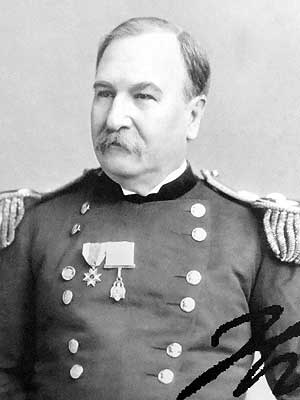
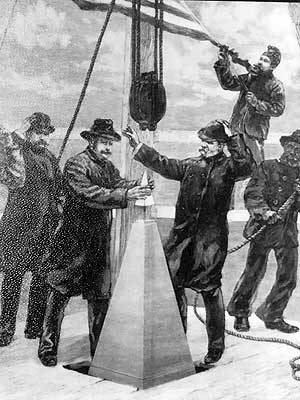
Captain Thomas Lincoln Casey became the engineer in charge at the fort in 1861. He had experience constructing numerous other forts.... He went on help place the cap on the Washington Monument in 1884.
The fort is known for its beautiful granite. Years were spent quarrying, moving, cutting, finishing and placing it. The wharf and batteries were built from local granite from Mosquito Mountain. When the foundation and wall of the main structure began in 1854, the stone was obtained from nearby Mt. Waldo. Barges would bring the large blocks to the fort's wharf.
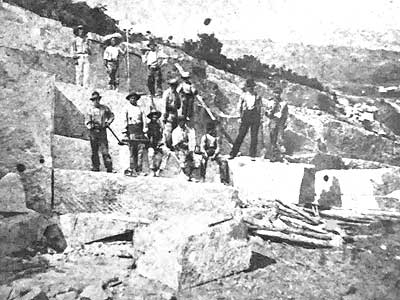
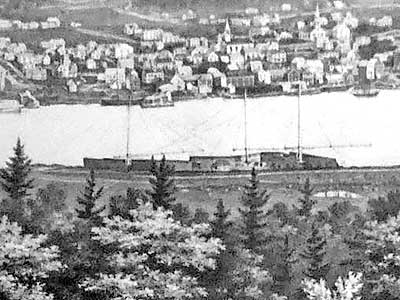
Workers at Mt. Waldo quarry, 1880 ... An 1859 lithograph shows the front wall under construction with three derricks, which were used to move the heavy stone blocks.
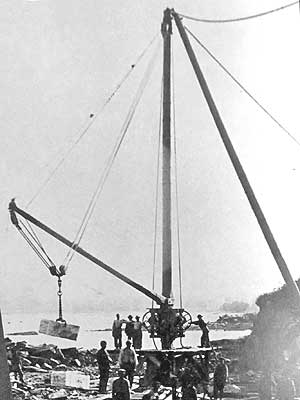
A typical derrick of the time
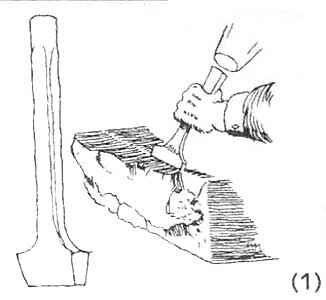
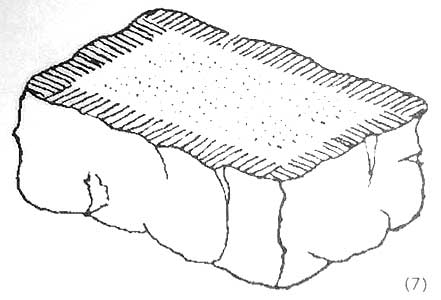
The granite blocks were cut by hand. Blacksmiths were required to keep the tools sharp and in good repair. Many different steps and tools were required to get the finished product.
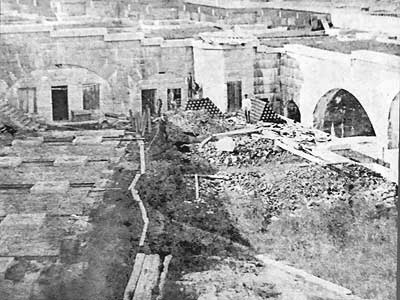
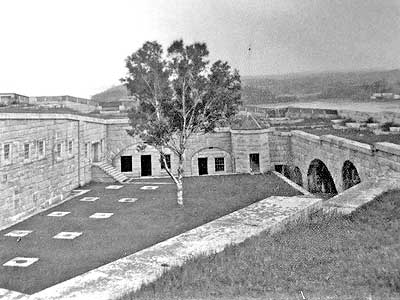
The parade ground during construction, circa 1869. Many of the fort's interior rooms were not completed. .... A postcard of the fort in 1930
The waterfront batteries were the first areas completed in the 1840s but they didn't receive any cannons. It wasn't until the 1863 that new, larger cannons (10-inch Rodmans) were to be brought in. This meant that workers and stone cutters had to dismantle and rebuild the existing gun emplacements to accommodate them.
Rodman cannons were named after Thomas Jefferson Rodman who developed a new method of casting cannons, greatly improving their strength and safety. Since they were also more streamlined and effective, they became very popular in both the North and South during the Civil War. The 10-inch refers to the diameter inside the barrel.
Eventually, advancements in naval and armament technology, resulting in a change in defense strategies, shifted the military's priorities away from massive granite forts. As a result, it would never see all of its 135 emplacements filled with cannons.
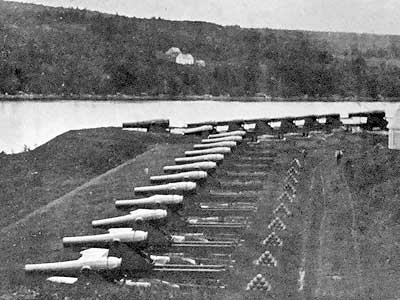
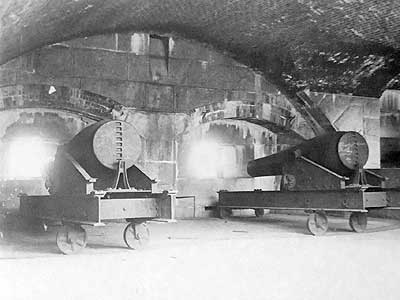
Battery A with many 10-inch and two larger 15-inch Rodmans. ... Fourteen 10-inch Rodmans arrived in 1866 for the interior casements. The sole surviving one was made in 1865 in Pittsburgh, Pennsylvania. (photo circa 1930)
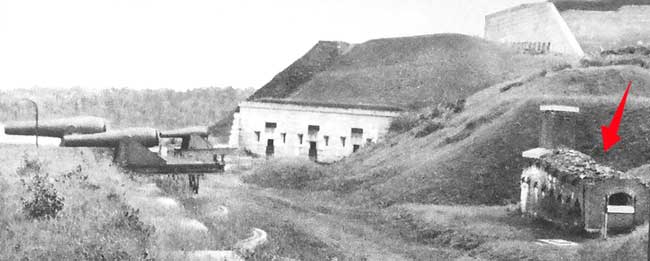
Battery B, with two Rodman cannons and an 1853 hot shot furnace. The furnace could heat cannonballs so that they could set fire to enemy ships. However, that was technology meant for the older cannons (which never arrived). The Rodmans could fire much larger cannonballs that were more effective against the new ironclad ships.
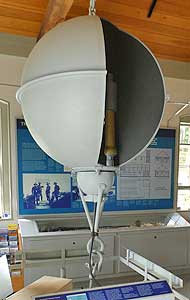
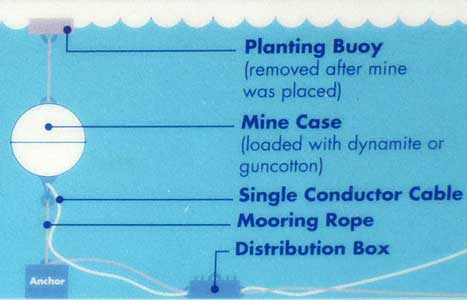
This is a model of a buoyant submarine mine or torpedo. These were placed in the river between Fort Knox and Verona Island during the Spanish-American war in 1898. These were the most modern weapons against ships since they exploded the hulls. These kind did not explode on contact. They had to be detonated by someone on the shore.
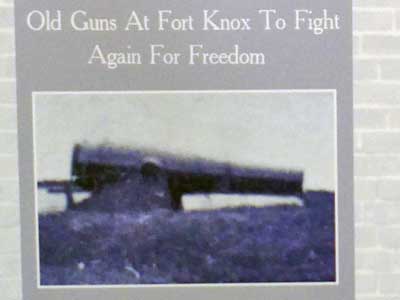
In 1923, the US Congress authorized the disposal of military properties that no longer served the nation's defensive needs. The Third System forts were offered up for sale to the Maine government. For a mere $2,121, Fort Knox became a historic preserve in 1923. Unfortunately in 1920, 19 cannons had been sold for salvage in preparation to get rid of the fort. The state was able to buy back some of them. Unfortunately in 1942, the cannons were targeted for salvage as part of the state's WWII effort. Two were saved for the fort while the rest were melted down.
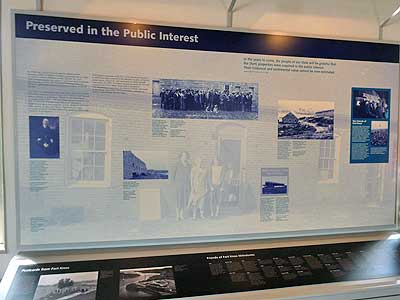
The first area we explored was Battery B and the wharf on the Penobscot River. Samuel de Champlain sailed past here in 1604.
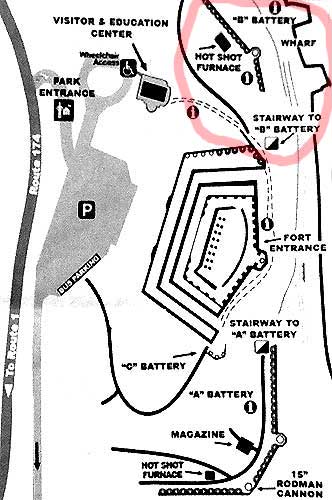
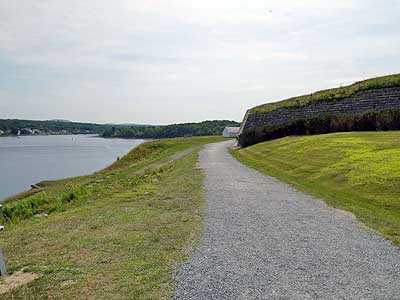
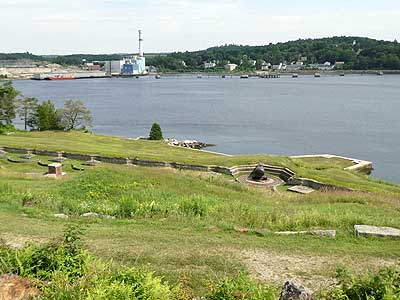
Looking down on Battery B
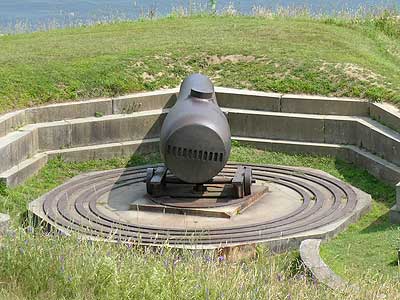
The fort was under construction for over 20 years. Plans and parts constantly had to be changed and rebuilt. Battery B was built in 1845 for fifteen 32-pounder cannons... which never arrived. There were still no cannons here when the Civil War began in 1861. When the cannons finally did arrive, they were 10-inch Rodmans. Crews spent months rebuilding the emplacements. The 15-inch Rodman remaining here was one of the two saved from the WWII salvage effort.
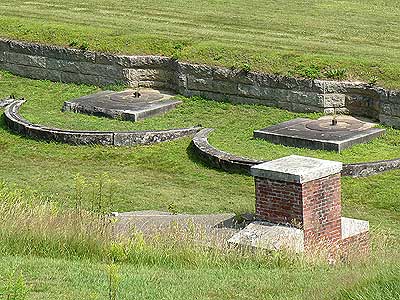
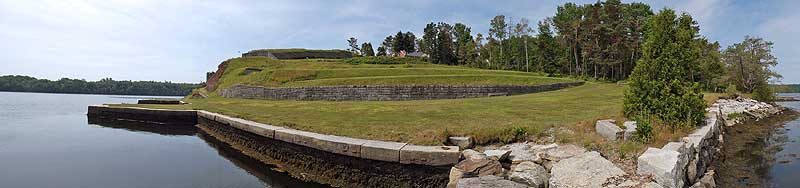
Panorama of Battery B from the river
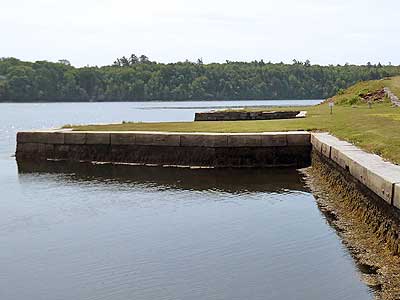
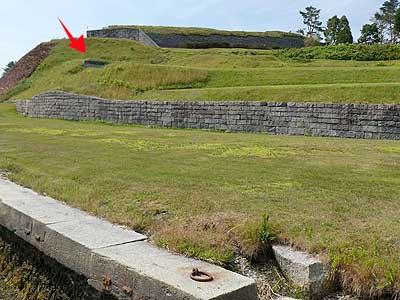
The wharf ... The Rodman cannon
return • continue


