COASTAL DRIVE (Day 8 - part 2)
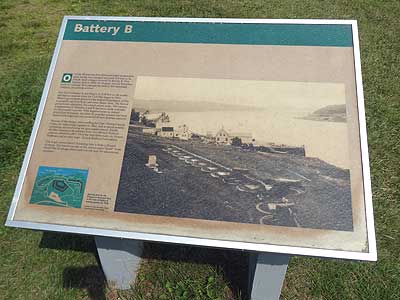
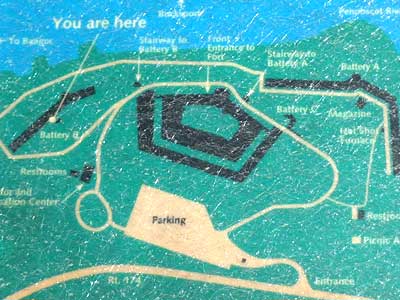
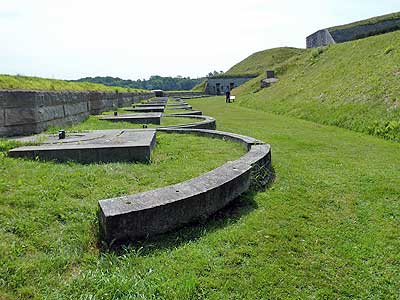
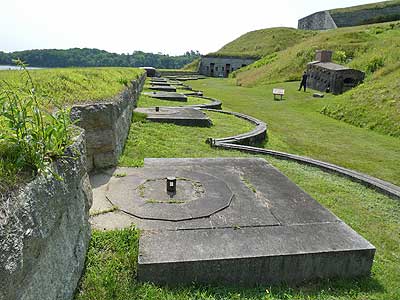
We came up from the river and strolled the length of Battery B.
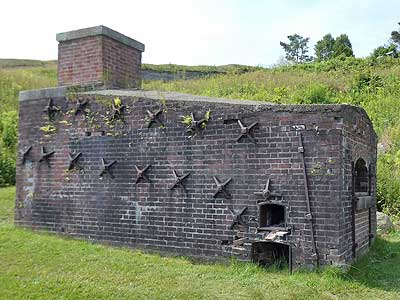
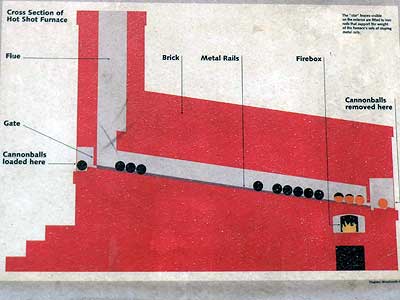
This hot shot furnace was built in 1858 to heat cannonballs for the 32-pounder cannons, which never got here. A fire-heated cannonball could set enemy ships on fire. Even though it was never fired up, it remains here as an important feature of early cannon technology.
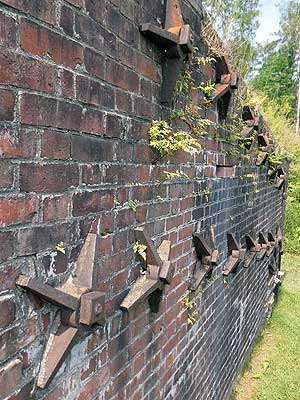
The star braces are fitted to iron rods that support the weight of the sloping metal rails.
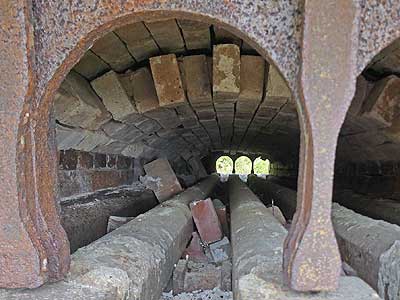
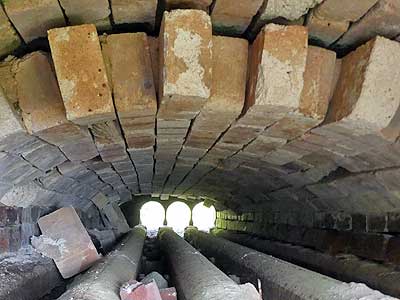
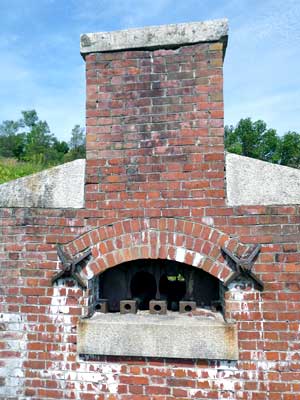
Cannonballs would have been placed in here (note the metal rails to roll down on) ...
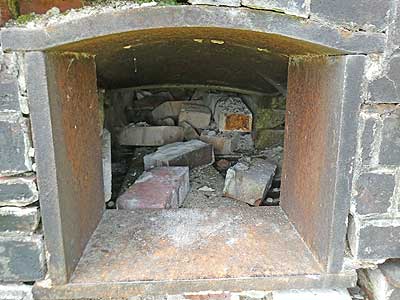
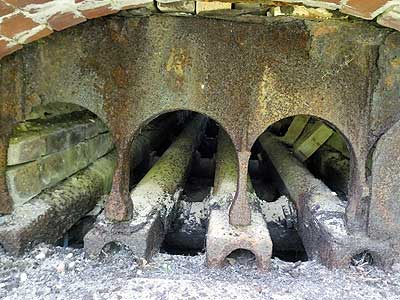
... remained above the oven for around 30 minutes (fires here were mostly likely made with coal) ... and exited here. They would have been carefully removed with iron forks, scraped with a rasp to smooth them, then carried to the nearby cannons using iron and wood ladles.
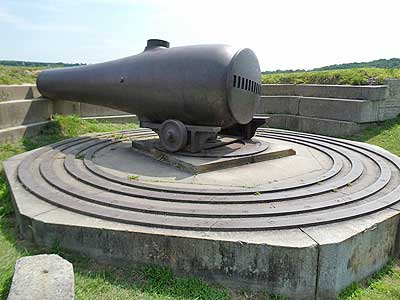
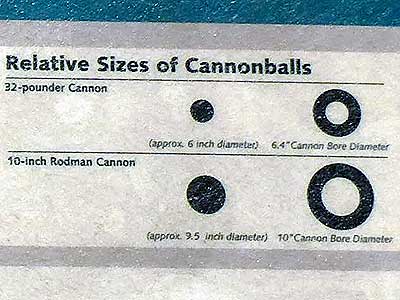
The 15-inch Rodman
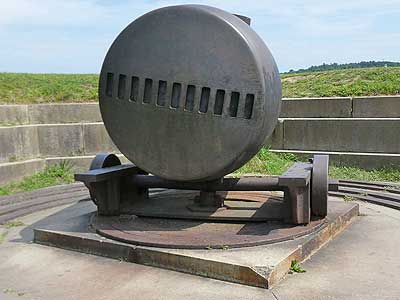
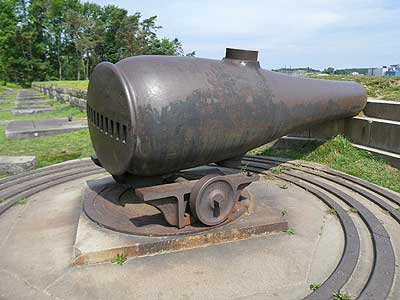
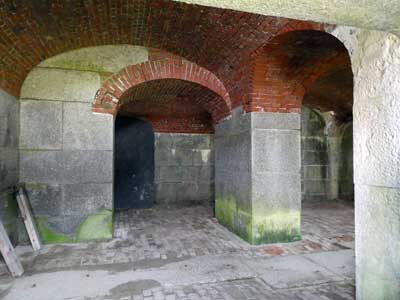
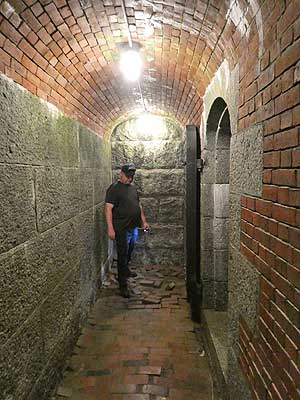
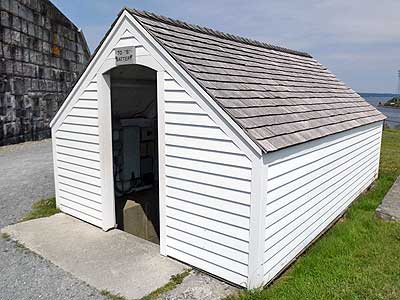
We entered the building at the end of the battery and wandered around in the dark. Eventually we realized that a set of stairs led up to the fort level.
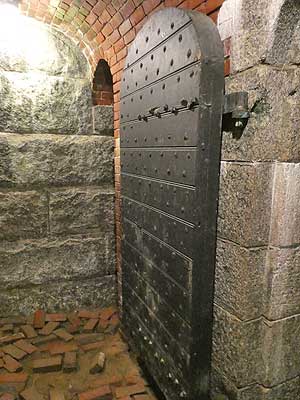
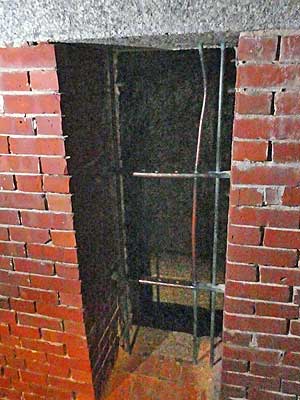
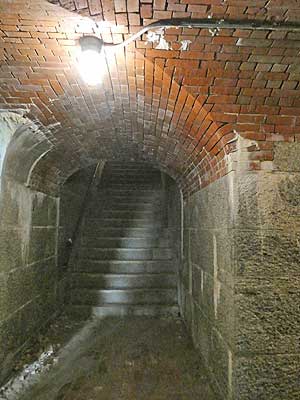
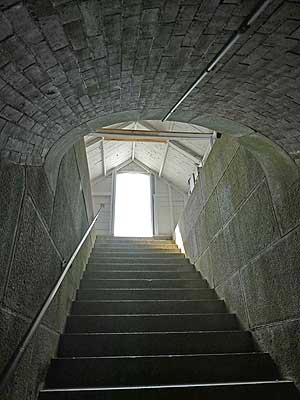
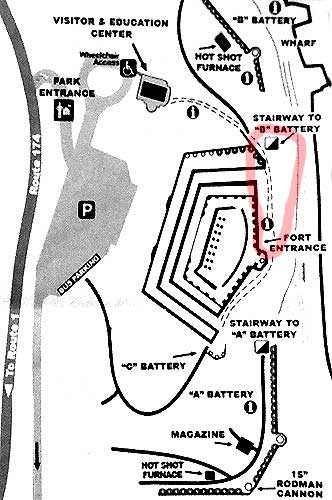
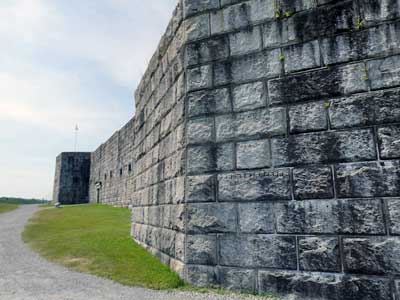
We left the upper Battery B building and followed the fort wall to its entrance.
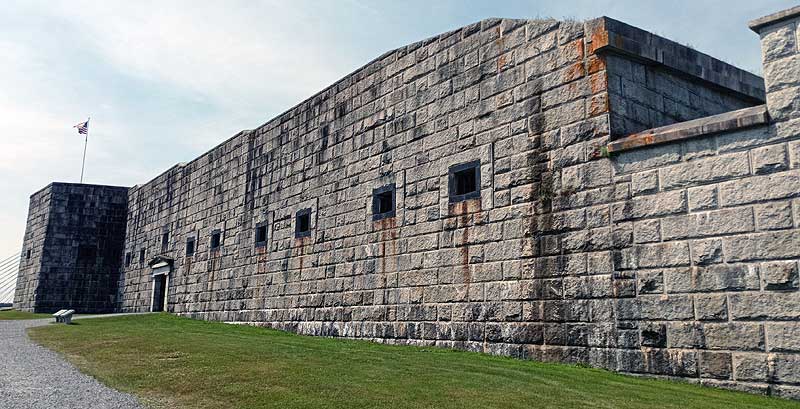
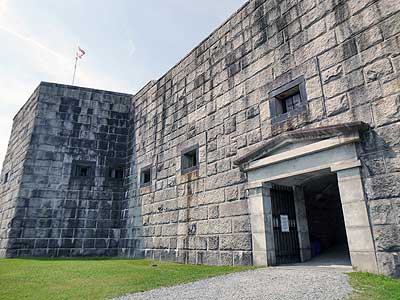
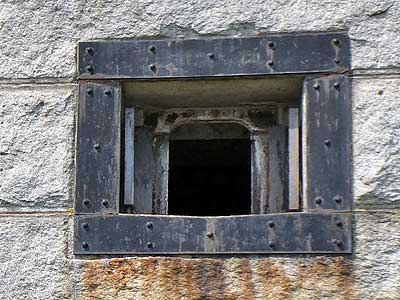
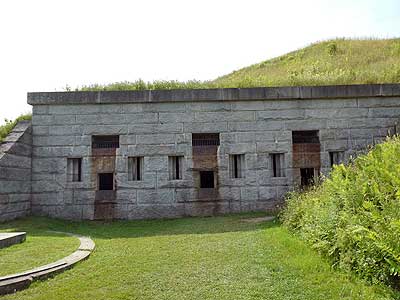
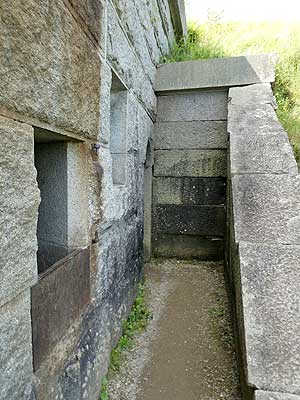
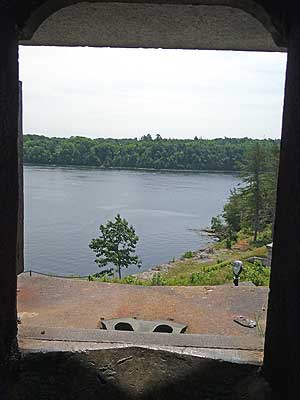
Cannon ports were equipped with iron shutters which could be opened and then slammed shut after firing.
Upon entering the fort, we first explored the casemates.
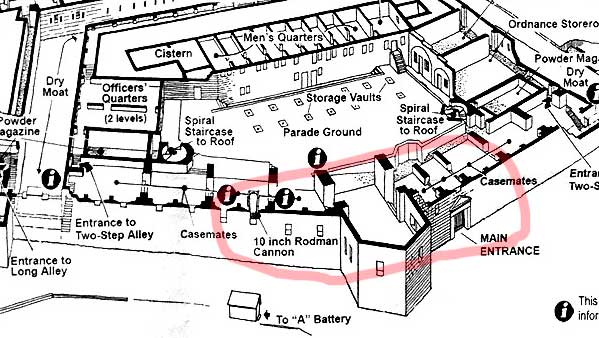
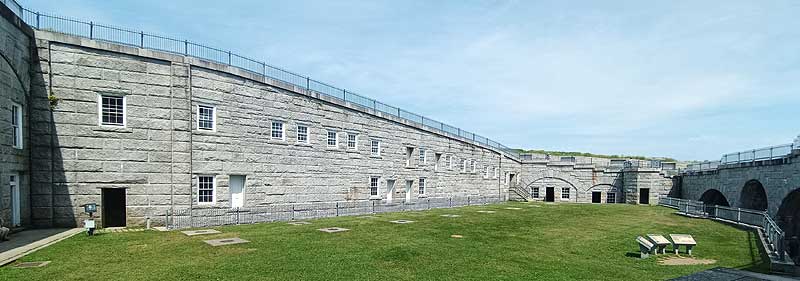
Parade ground, with arched casemates to the right
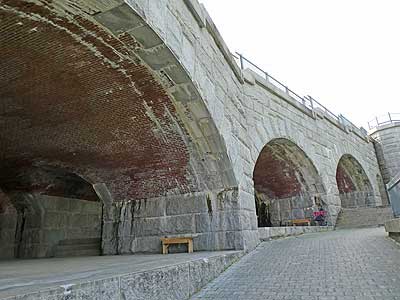
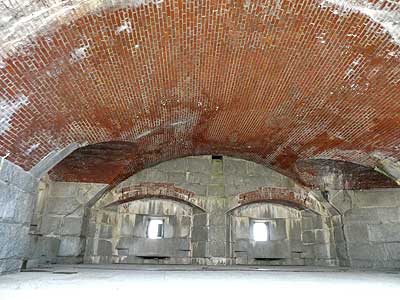
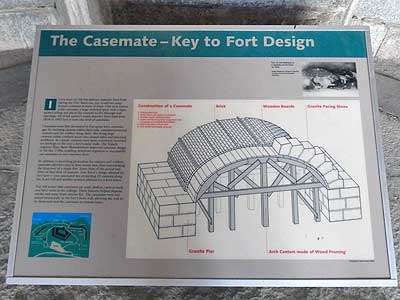
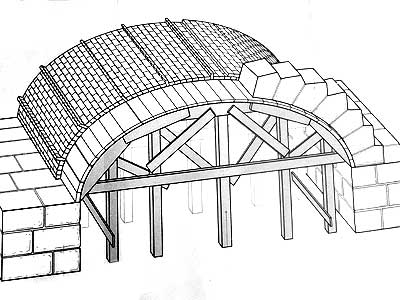
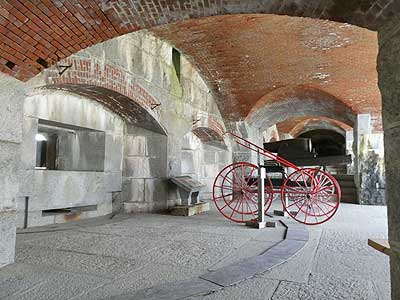
A casement is a large enclosed space with a high arched ceiling and places for cannons to fire through wall openings. All of the nation's major masonry forts built from 1816 to 1867 have at least one level of them. The idea was first developed in Europe centuries before. By enclosing cannons within thick walls, they offered them (and the soldiers firing them) protection. The large area helped with firing large cannons within a confined space (such as dispersing the smoke). They were also not attached to the fort wall, allowing it to be destroyed while they remained intact. Casements also allowed for forts to have several tiers of cannons. At Fort Knox, 23 cannons could be placed in the casement along the front wall, while smaller cannons could be placed on a top level.
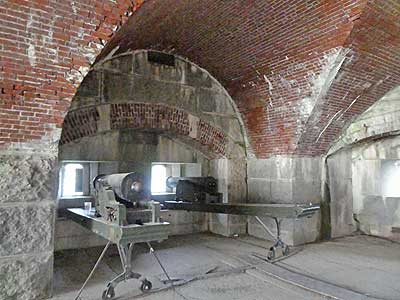
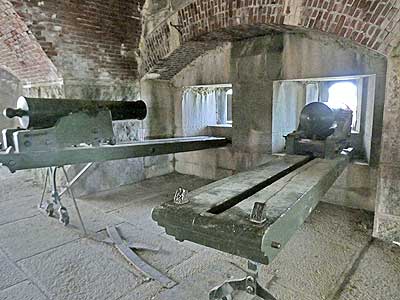
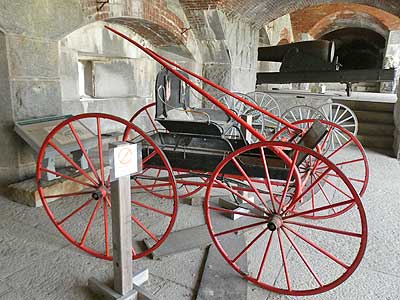
Two 24-pounder flank howitzer cannons and carriages
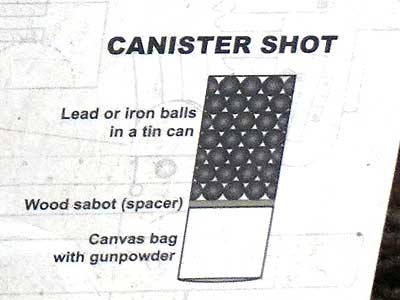
The three cannons here are original to the fort and were meant to defend it against any attack by infantry over land. They were loaded with a 24-pound canister shot (like a giant shotgun shell) and designed to fire into the flank of the enemy infantry.
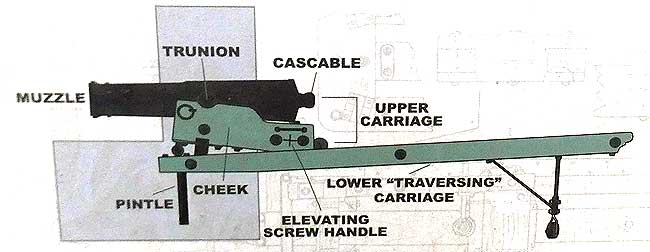
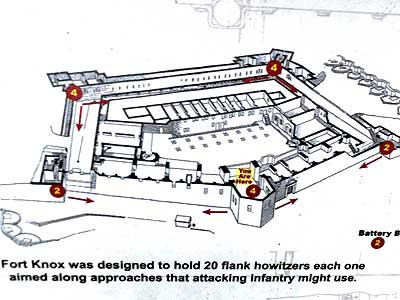
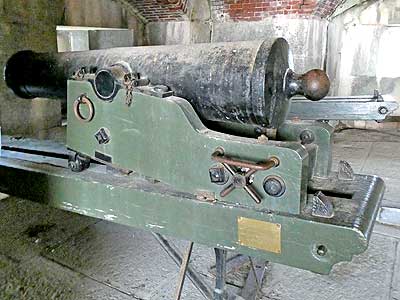
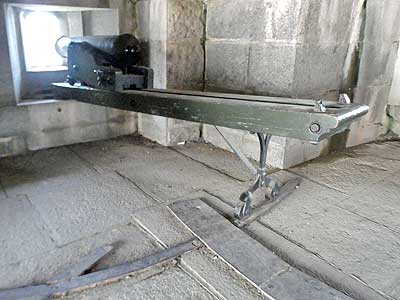
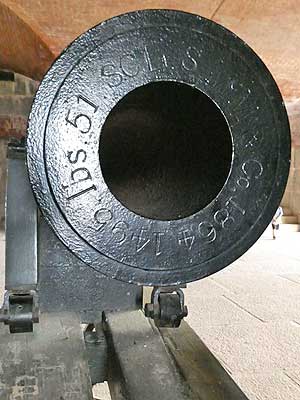
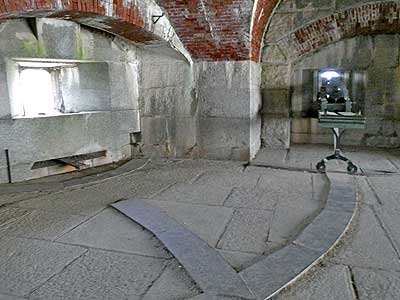
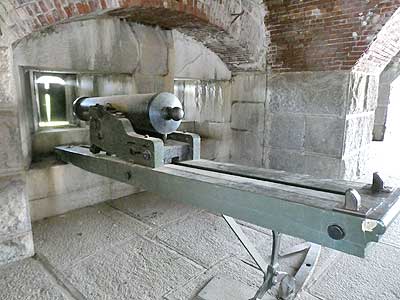
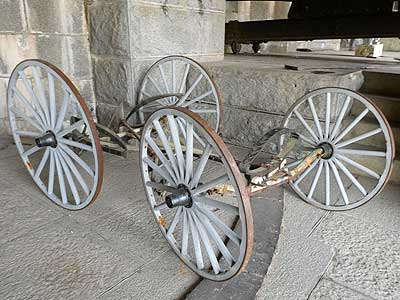
The third flank howitzer cannon
return • continue


