COASTAL DRIVE (Day 8 - part 3)
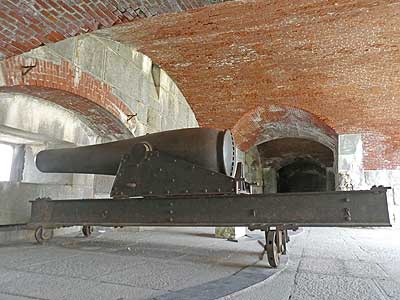
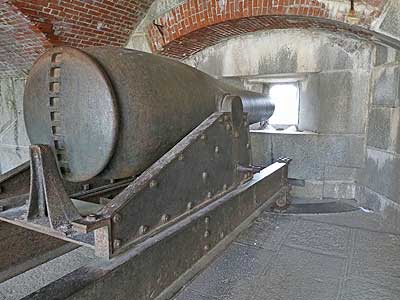
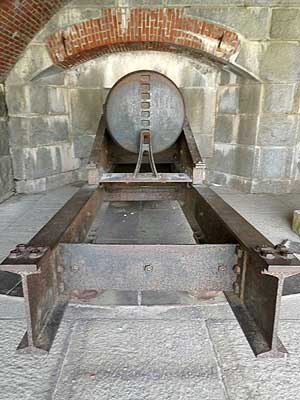
A 10-inch Rodman
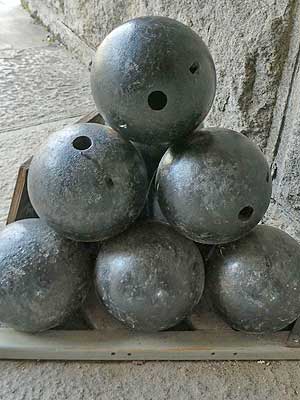
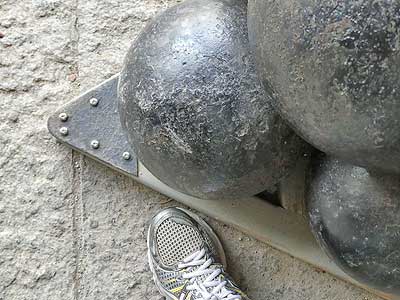
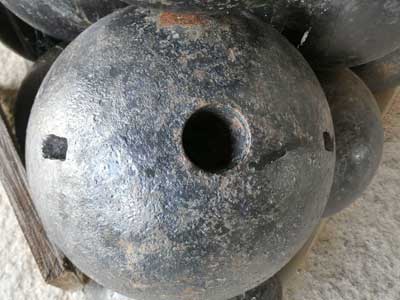
The holes are so that the cannonball can be lifted using tongs
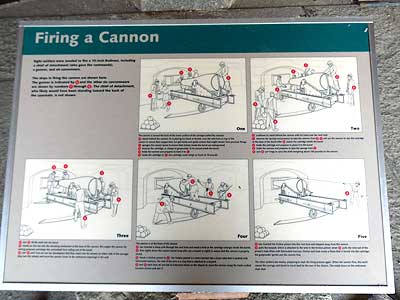
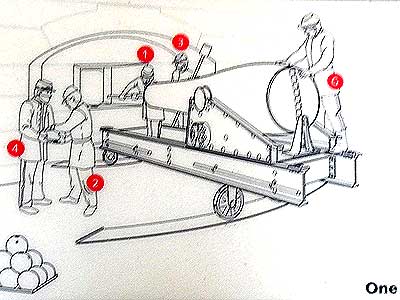
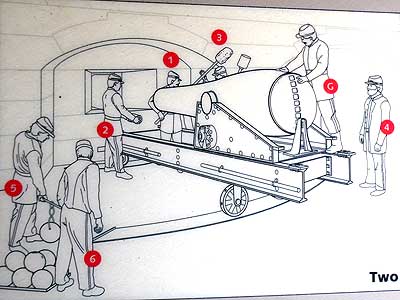
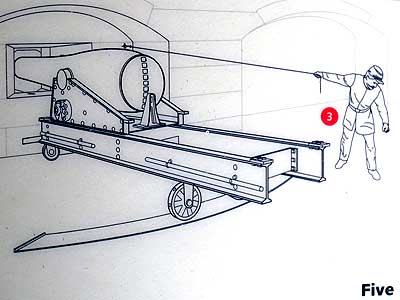
How to fire a cannon
One: The cannon is moved to the back of the chassis. The gunner (G) stands behind it, placing his hand over the vent hole on top to ensure that oxygen does not get inside and ignite any embers that might remain from previous firings. Man #1 sponges the cannon barrel to ensure old embers are extinguished. Man #3 standing next to him holds the rammer. Man #2 receives the cartridge (or charge of gunpowder which could weigh as much as 18 pounds) from Man #4.
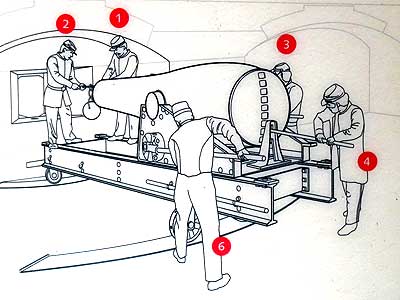
Two: #1 swaps out the sponge for the rammer. #2 waits with the cartridge, which will promptly be rammed to the back of the barrel. #5 and #6 use tongs to carry the cannonball (weighing about 100 pounds) to the cannon.
Three: #1 and #2 load the cannonball into the barrel. #3 and #6 use sticks that they insert into the sides of the cannon to start pushing it forward, closer to the wall. #4 puts a bar into the elevating mechanism at the base of the cannon to angle the cannon for aiming and prevent the cannonball from rolling out the barrel.
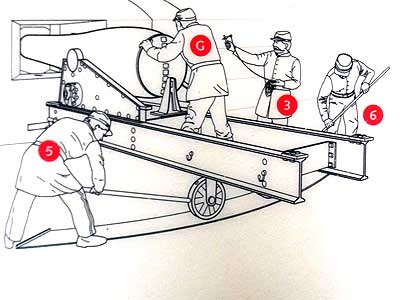
Four: #5 and #6 are now using bars to move the wheels along the tracks (or traverse circles) to aim it. The gunner has inserted a sharp pick through the vent hold and poked a hold in the cartridge (charge) inside the barrel. He then ensures the cannon is properly aimed. #3 hands the gunner a friction primer (a wire inserted into a brass tube that is packed with fulminated mercury; the end of the wire is shaped like a ring that is attached to a lanyard).
Five: After the gunner has inserted the friction primer into the vent hold and stepped away from the cannon, #3 pulls the lanyard. This pulls the wire out of the brass tube filled with the mercury. Friction and heat create a flame that is forced into the cartridge. The gunpowder ignites and the cannon fires. This causes the cannon to recoil and travel back to the rear of the chassis.
We left the casements and entered back into the parade grounds.
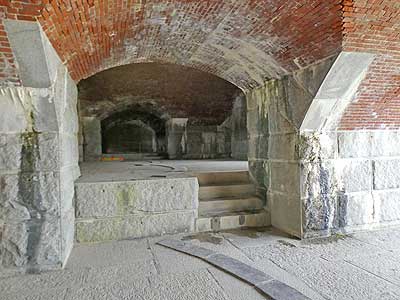
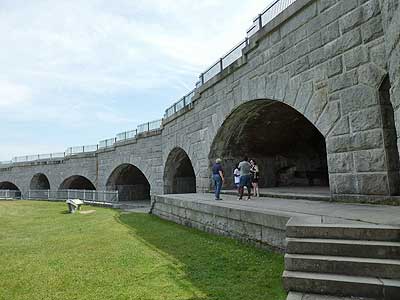
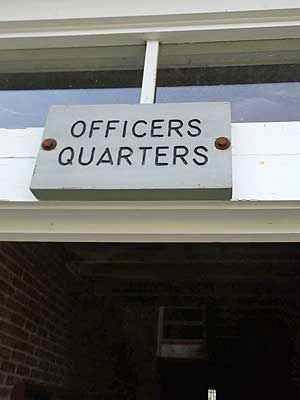
To our left was the powder magazine and the officers' quarters.
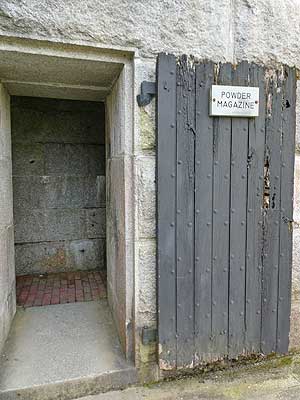
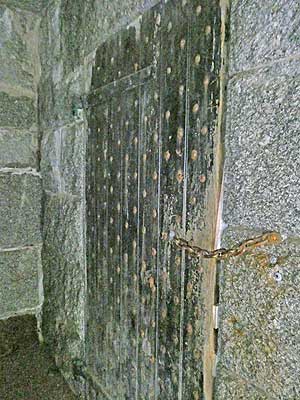
The magazines would have contained barrels of gunpowder or boxes packed with loaded cartridges and were probably designed to service the nearby cannons. They would have been well-protected and carefully ventilated. Soldiers entering the magazine had to remove their shoes to ensure the iron pegs in their boot soles did not create any sparks. All tools used in here had to be made of either wood or copper.
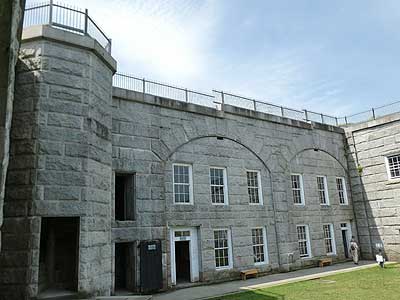
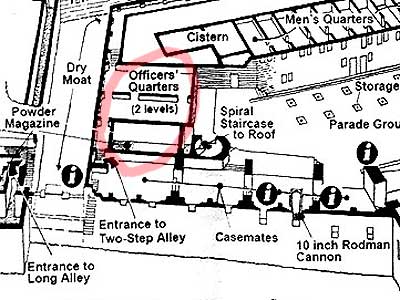
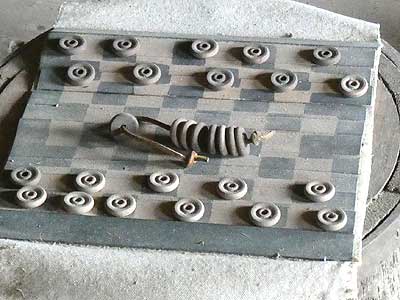
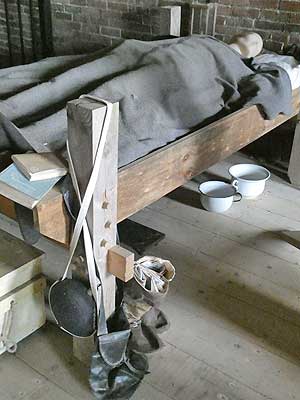
It is likely that the rooms in the officers' quarters would have been the fort's most comfortable living spaces. The building was two-stories but we could only visit the downstairs which contained an exhibit.
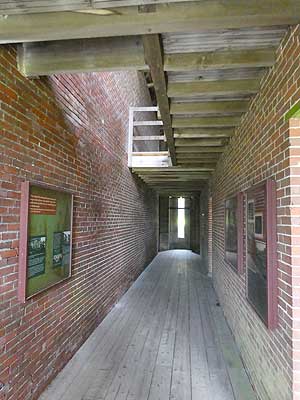
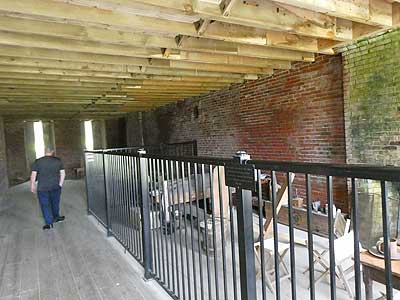
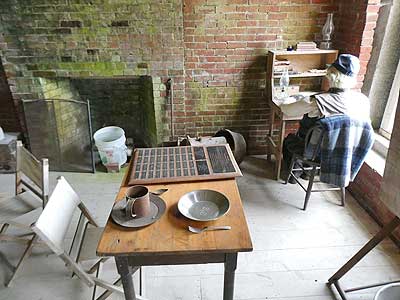
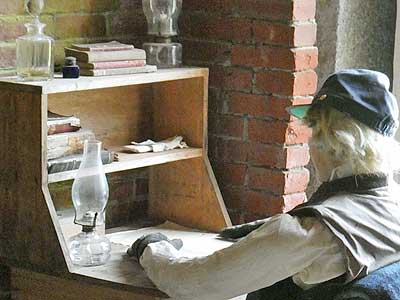
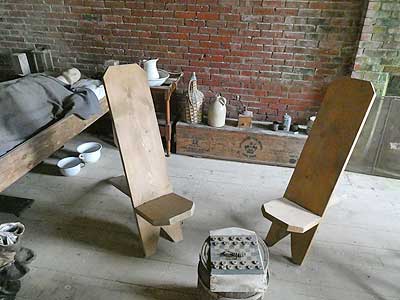
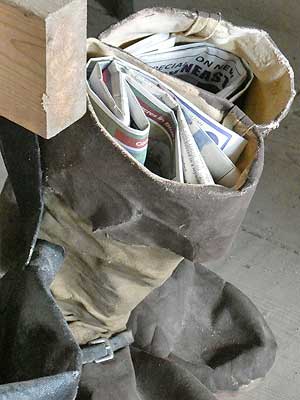
Soldiers often stuffed their boots with newspapers to help keep their feet warm.
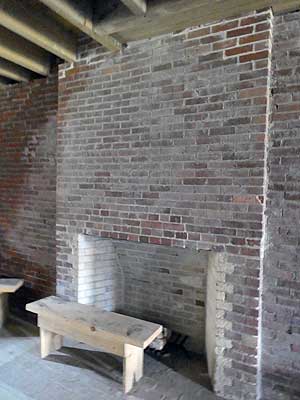
An old fireplace
Back outside on the parade ground, we got a view of the storage vaults and men's quarters.
The fort never had soldiers living within its walls except for a few weeks during the Spanish-American War in 1898 when Connecticut troops camped on the open grass or in nearby rooms. Before that, during the Civil War, when 30 soldiers arrived here in 1863, the fort was still under construction and not fit for occupation. They lived in a temporary wooden barracks building nearby until they were discharged in 1865. Therefore, the major portion of the permanent living quarters was never built. There were plans of sleeping rooms, plumbing for privies, washrooms, a kitchen, a bakery and laundry rooms. The rooms would have been heated by stoves.
The underground storage vaults were used for storage of fuel such as coal.
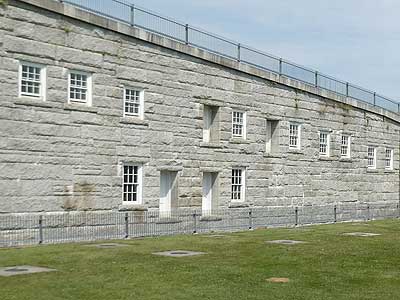
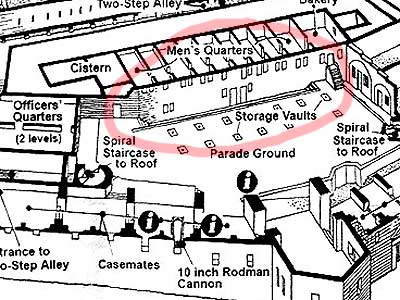
Storage vaults in ground, and behind them, the two rooms behind the white doors have evidence of plumbing and were very likely the privies.
At the other side of the parade grounds were the storerooms. The regular storeroom was probably meant for equipment needed to manage and operate the fort. The ordnance storeroom was meant for arms and equipment for firing the cannons. It originally had wooden floors.
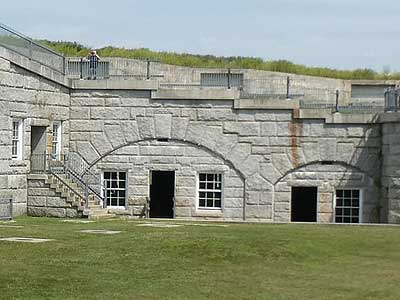
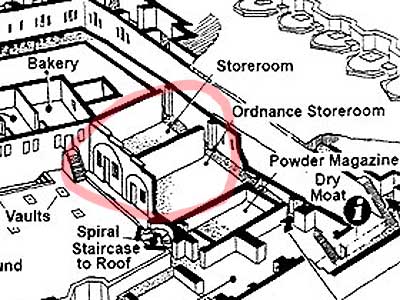
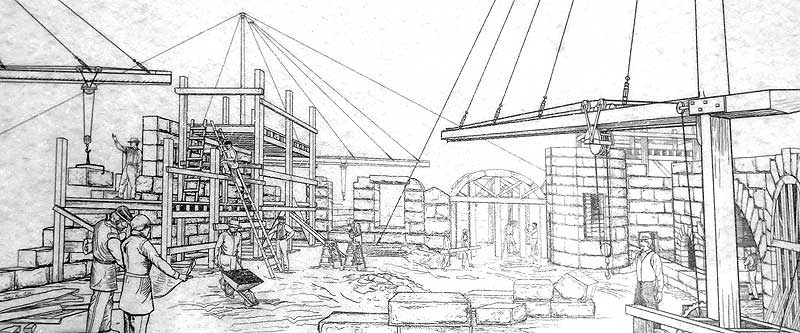
Because the fort was built from the outside to the inside, the walls lining the parade ground were the last to be completed.
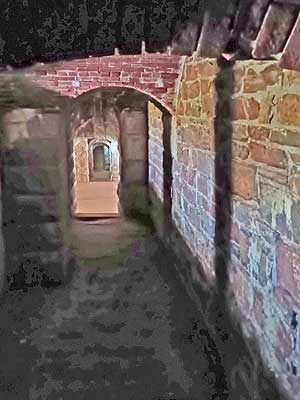
A set of stairs on the other side of the officers' quarters took us into a maze of upstair passageways and rooms all around the fort. Eventually we ended up back at the casemates.
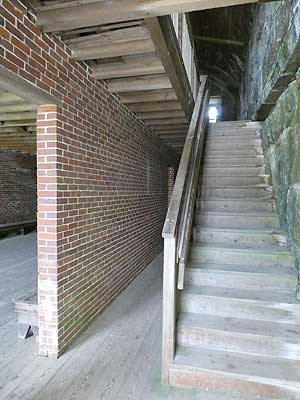
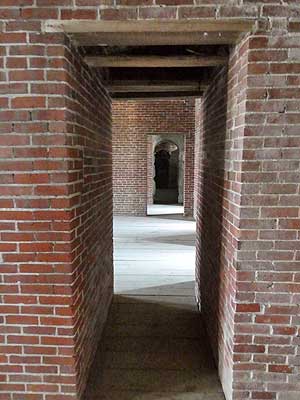
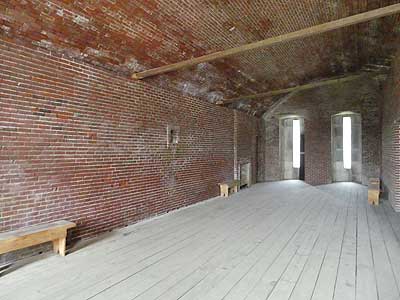
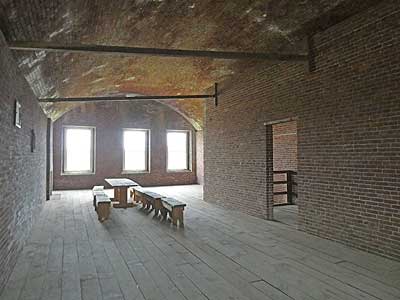
(right) The room above the officers' quarters exhibit
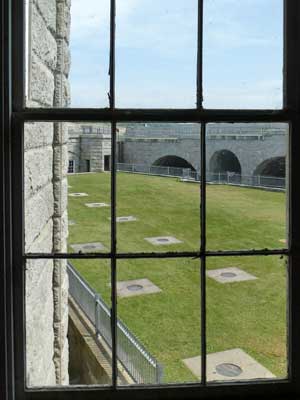
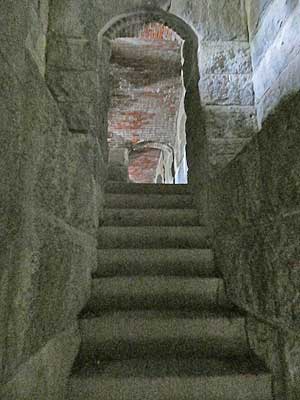
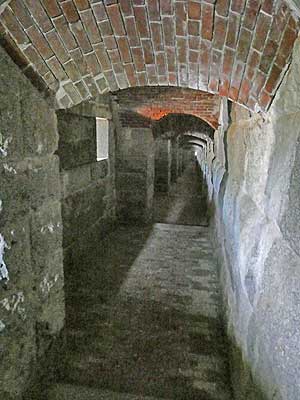
It was actually quite dark and I had to use the flashlight on my phone to see.
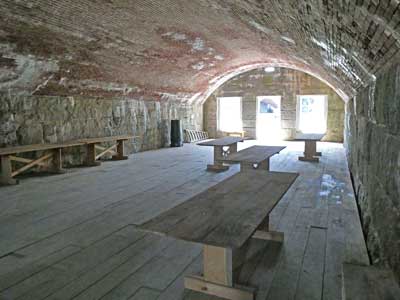
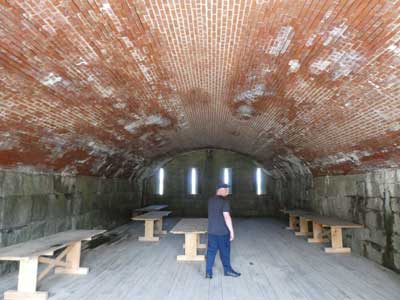
The storeroom
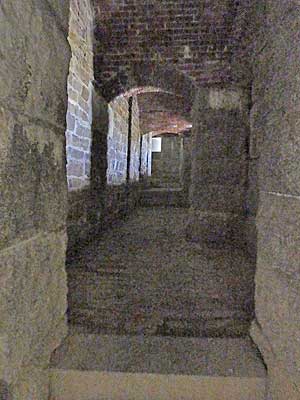
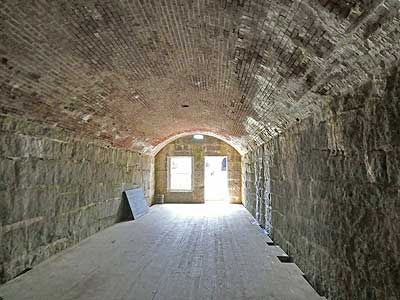
The ordnance storeroom
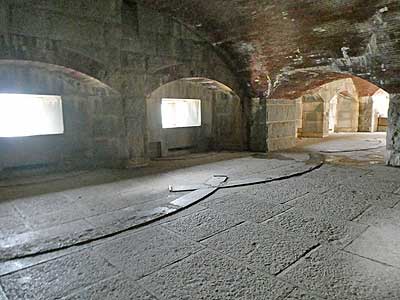
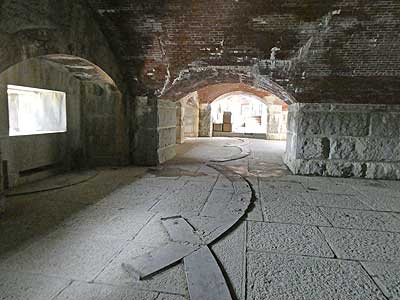
The far end of the casemates
return • continue


