COASTAL DRIVE (Day 8 - part 4)
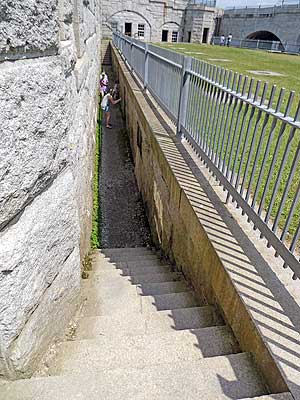
From the edge of the casemates, we found a set of stairs that took us down into the ditch.
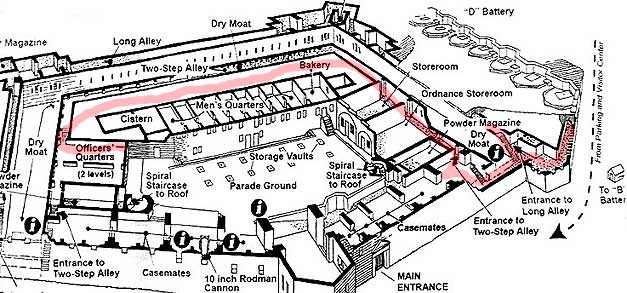
My best guess as to the path of our dark passageway adventure
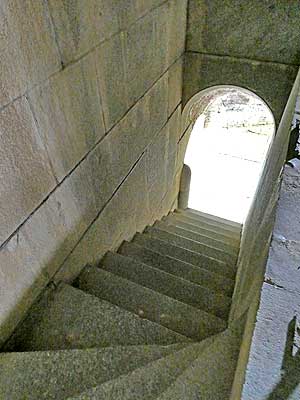
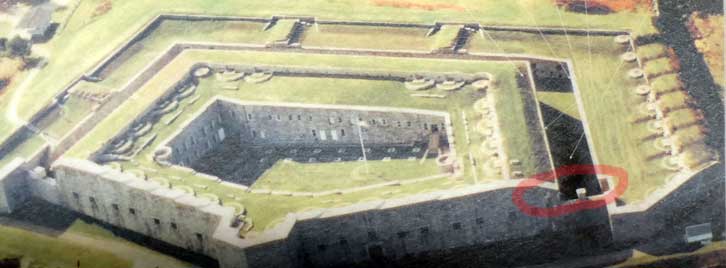
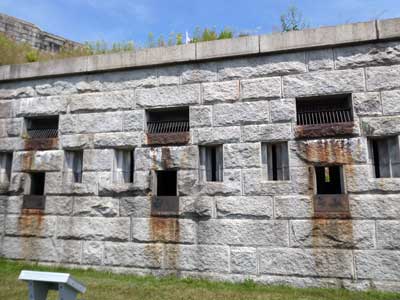
The ditch (or dry moat) provided defense from land-based attacks. Enemies approaching the fort on foot would have to cross this in order to reach the main fort structure. Each side was lined with narrow openings (rifle ports) in the walls.
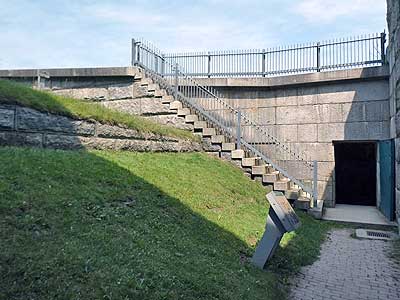
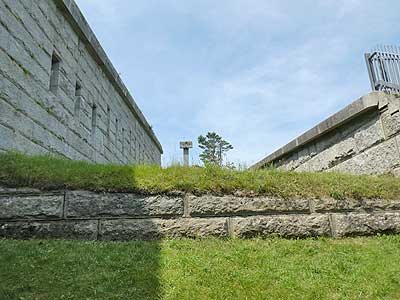
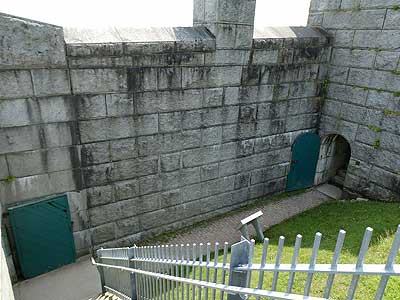
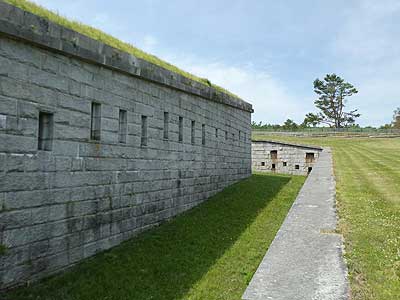
View from atop the side set of stairs
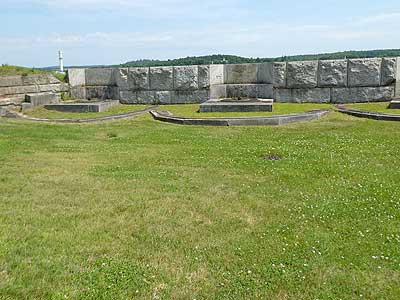
Battery D
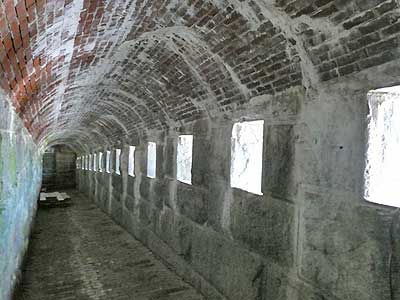
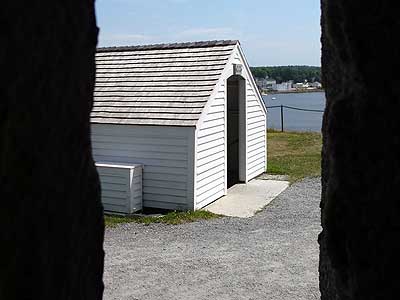
The connecting side passageway overlooking the building leading down to Battery B
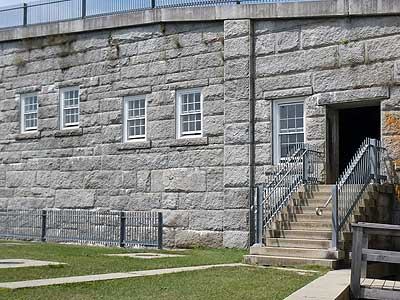
Back in the parade grounds, we explored the storage vaults, bakery and the downstairs floor of the men's quarters.
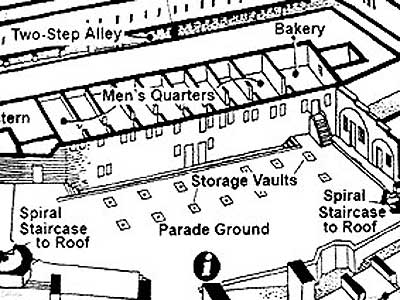
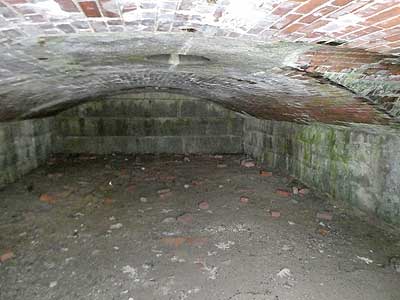
Getting a view into the storage vaults
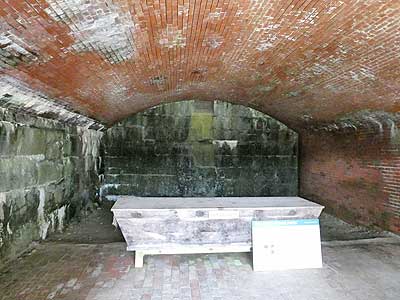
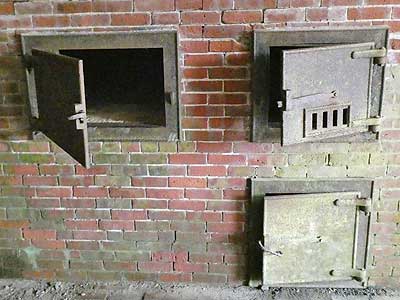
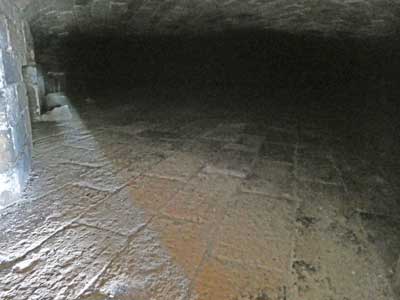
The bakery
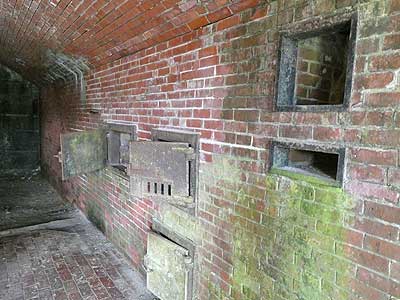
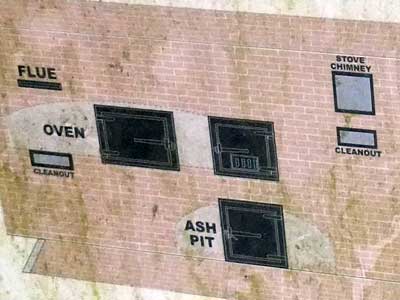
In the bakery, the oven was built into the masonry walls, making it fireproof. Built in 1863, this huge oven was designed to cook each soldier's daily ration of 1.5 pounds of bread. At 15 feet deep and 10 feet wide, it could hold nearly 400 loaves at a time. A cast iron cook stove heated water, stove and other items.
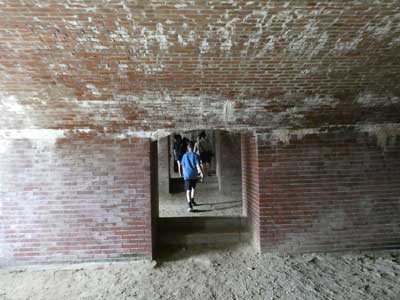
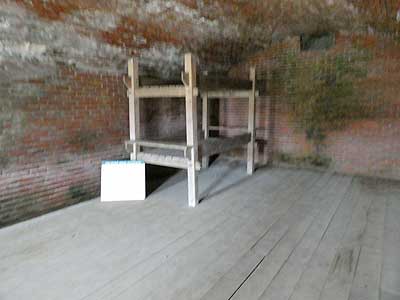
Since the enlisted men's quarters were never built out, we didn't go very far in.
We took a staircase from the parade ground up to the roof.
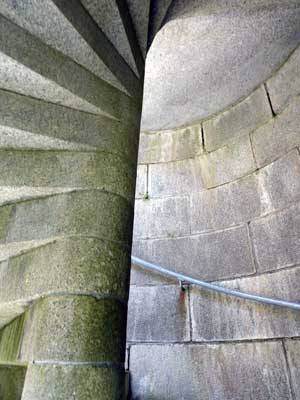
Spiral staircases were efficient and didn't take up too much space.
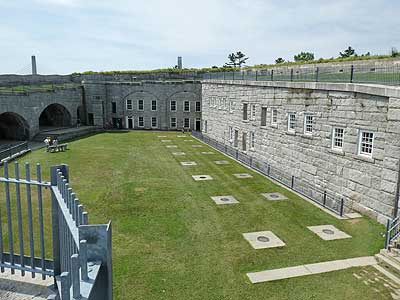
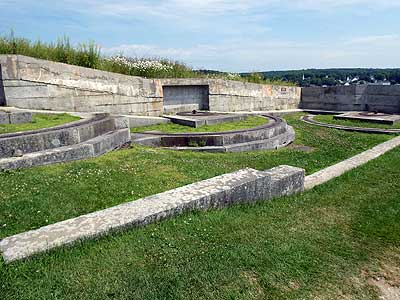
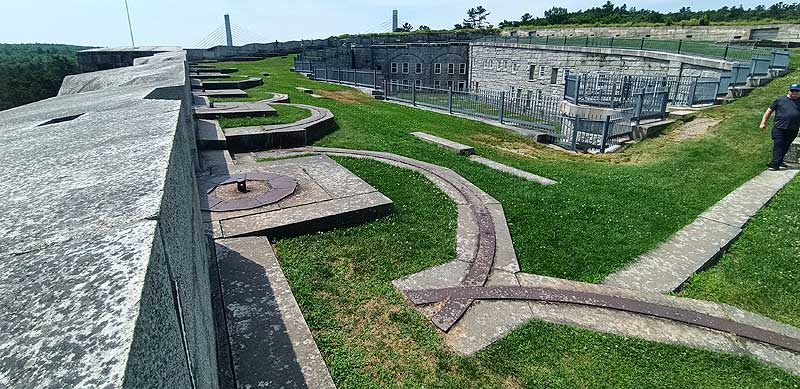
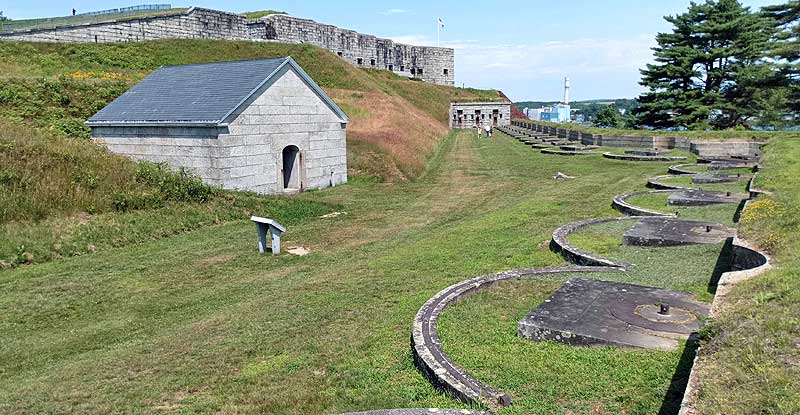
Looking down into the parade grounds ... old cannon emplacements
The roof, or terreplein, had emplacements for 30 cannons. These would have been smaller than those in the casemates. The gun circles were all completed in 1864, however since other areas such as the batteries and casemates proved of a higher priority, they received most of the 74 canons that were eventually delivered.
Most fort terrepleins were covered with earth. It was inexpensive, could be easily leveled, and helped absorb any impact from shells from enemy ships. It was also not easily damaged from the firing of the fort's own cannons.
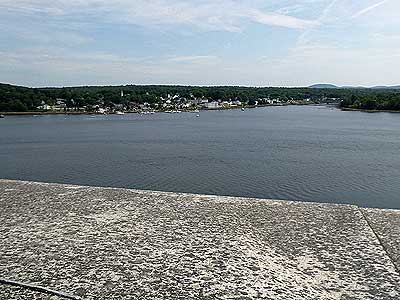
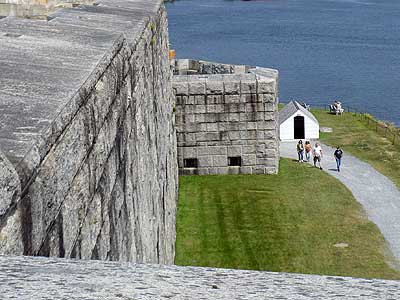
The Penobscot River ... Looking towards Battery B
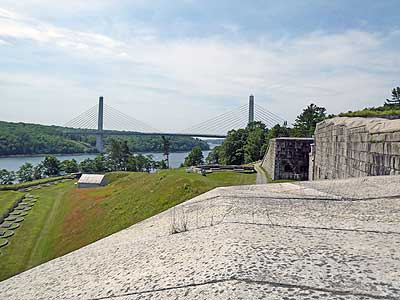
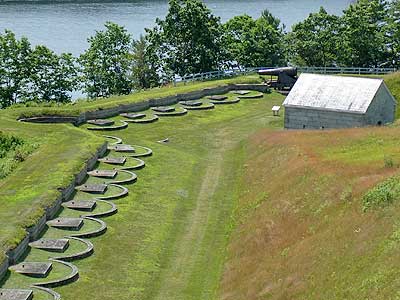
Overlooking Battery A
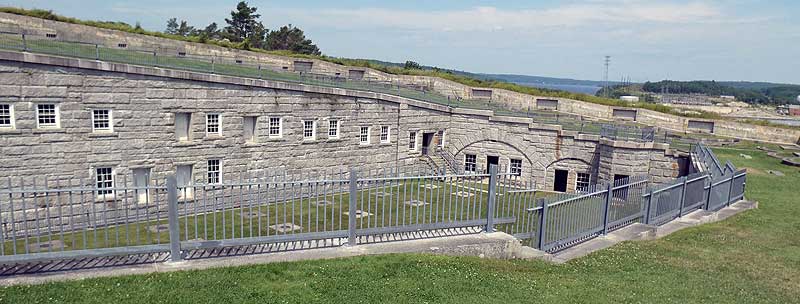
The fort has four batteries. We'd already seen B and D so we headed down to Battery A, the largest, with emplacements for 34 Rodman cannons. It was completed in 1845 but didn't get its first set of cannons until 1863.
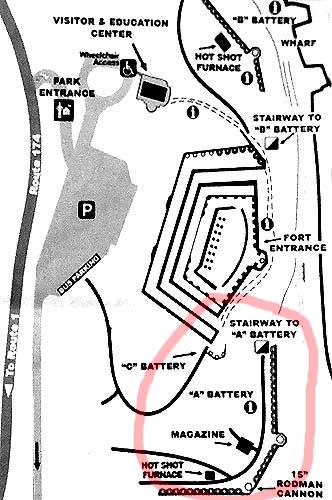
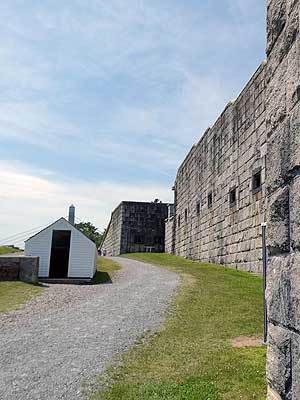
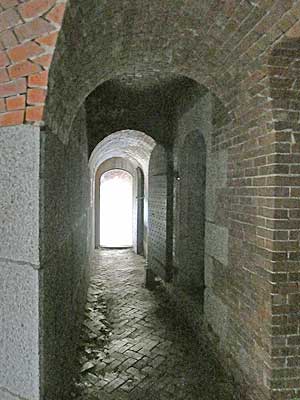
Building and passageway down
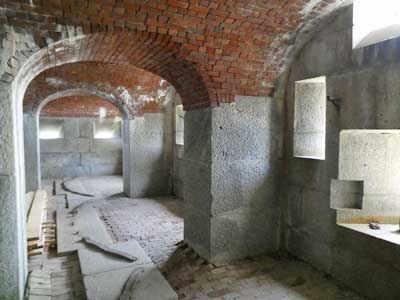
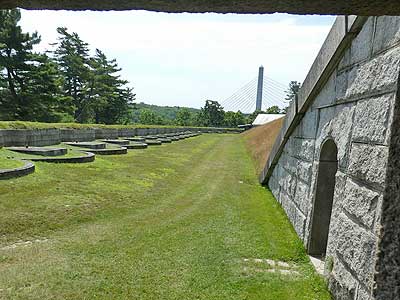
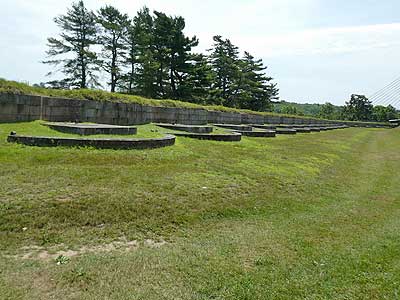
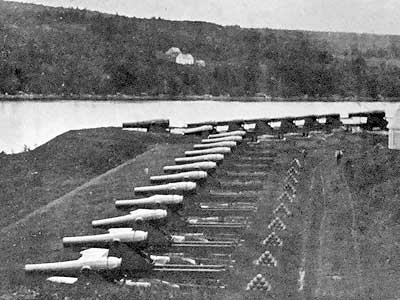
Battery A today .... This photo is from around 1870 and shows Battery A at full strength, with thirty two 10-inch Rodmans and two 15-inch Rodmans. Most of them were removed to be melted down for WWI, but fortunately they just sat in the salvage yard. When the State of Maine purchased the fort in 1923, it also bought some of them back. The cannon were not as lucky for WWII. Only one 15-inch Rodman stands here now.
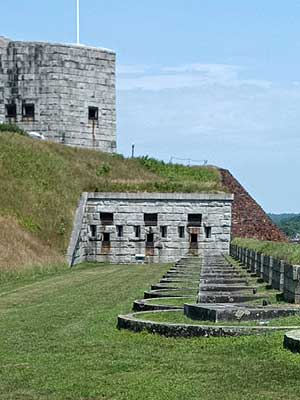
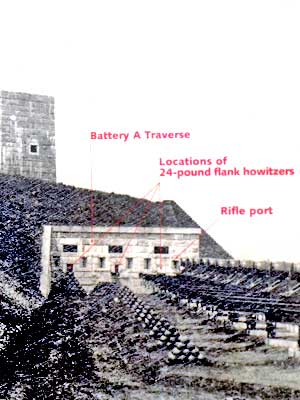
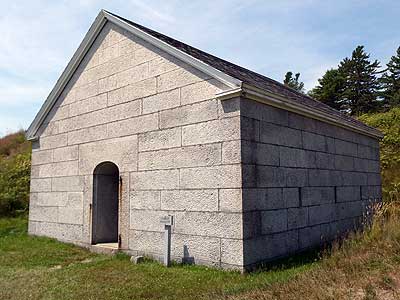
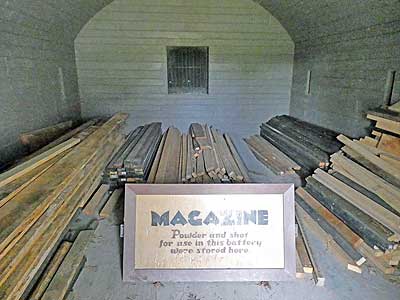
The powder magazine was completed sometime in 1845 and used to store gunpowder or cartridges for the nearby cannons.
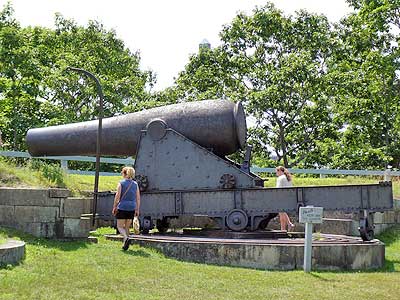
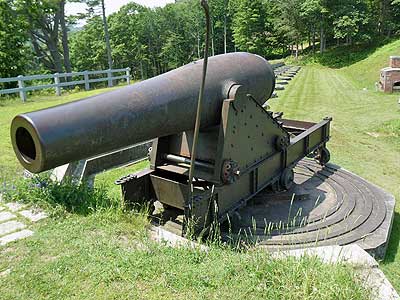
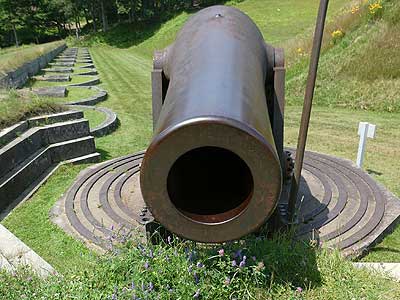
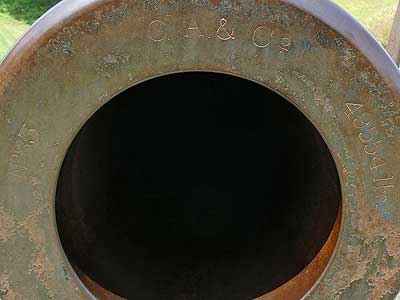
The 15-inch Rodman was cast in 1861. These were the largest muzzle-loading smoothbore cannons made. The tube alone weighs 50,000 pounds. A special crane had to be erected on the wharf to lift it when it arrived by boat in 1866. Twelve soldiers were needed to fire it. It was possible for a 450-pound cannonball to be shot over three miles!
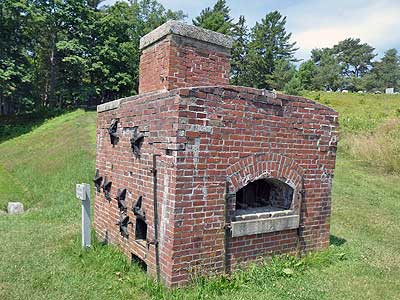
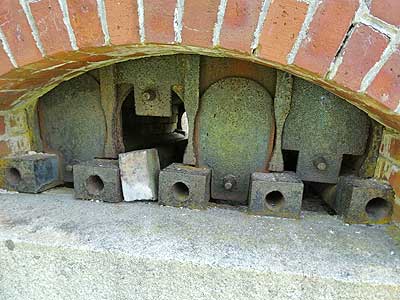
Another hot shot furnace
return • continue


