PORTLAND (Day 9 - part 2)
We started out with Fort Preble and the Spring Point Ledge Light.
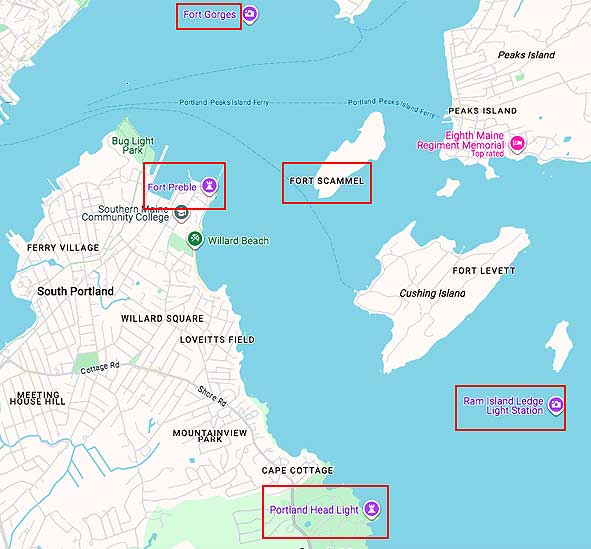
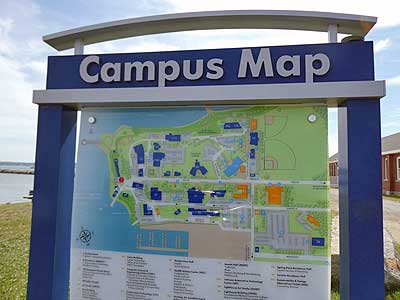 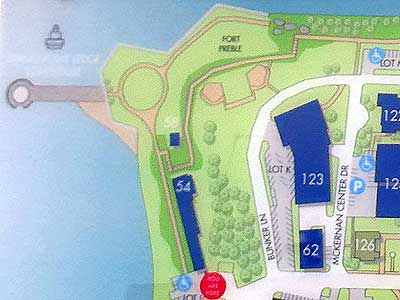
This area is now the campus of the Southern Maine Community College.
We had seen Fort Preble and the lighthouse from the air during our flight in from Denver!
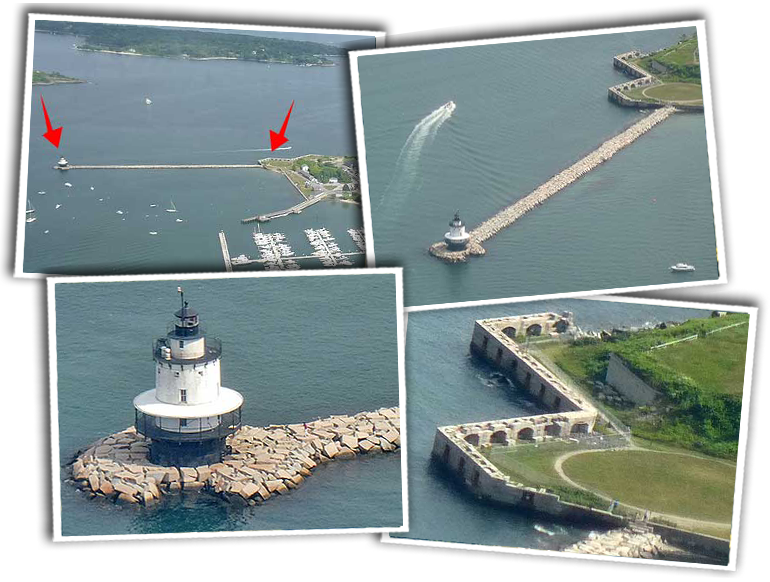
It was mostly fenced off so we could only admire it from a distance.
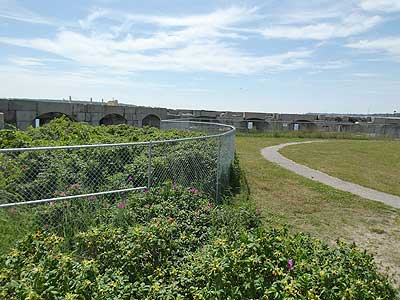 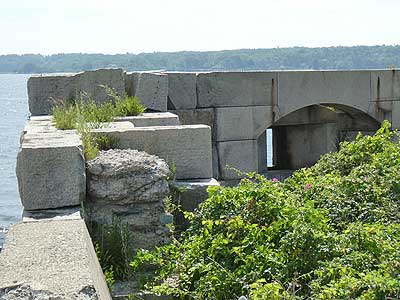
In 1807, new concerns over a possible war with Great Britain prompted President Thomas Jefferson to renew fortification programs, leading to the the Second System of US fortifications. Built in 1808, Fort Preble was a star fort made of stone, brick and sod, with 14 heavy guns. It was named in honor of Commodore Edward Preble (1761 - 1807), an American naval officer who served in the Revolutionary War and the First Barbary War. One common weakness among low-walled star forts, however, was exposure to enemy fire. This style would eventually be replaced by casemates (such as in Fort Knox).
From 1896 to 1906, modern artillery batteries were installed (such as at Fort William nearby). Much of Fort Preble's original star configuration was removed. After World War II, it was determined that coast defense forts were obsolete and the fort was inactivated in 1950. The remaining buildings include brick barracks, officers' quarters and even an incomplete granite casemate from a failed Civil War-era expansion.
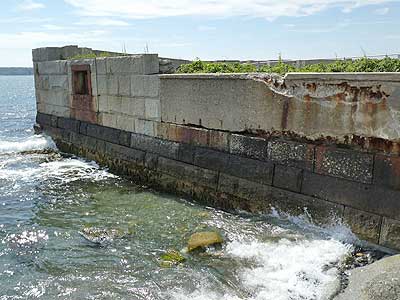 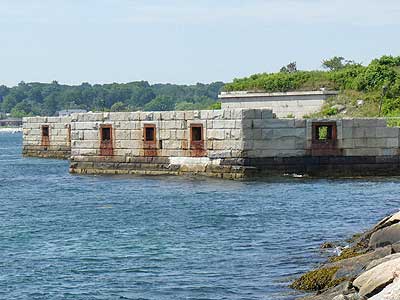
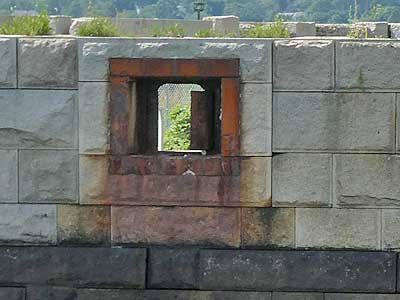
Iron shutters to protect the cannons and soldiers
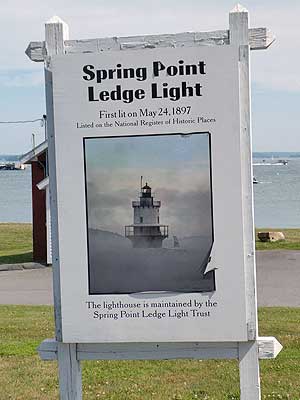 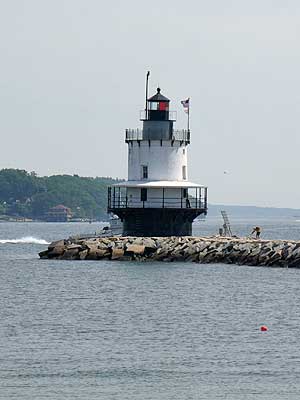
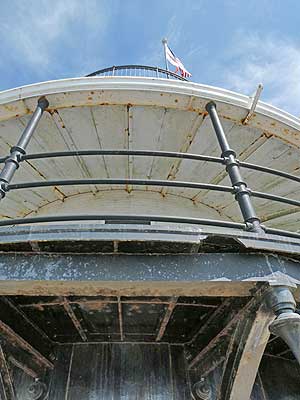
The Spring Point Ledge is a reef that extends from Fort Preble out to the westerly side of the main shipping channel into Portland Harbor. It was the cause of numerous shipwrecks. Eventually it was agreed that a warning beacon was necessary, and after five years of delay, the construction of the Spring Point Ledge Lighthouse finally began in 1896.
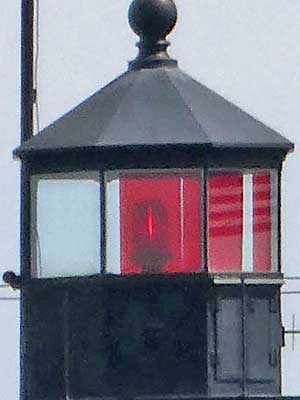
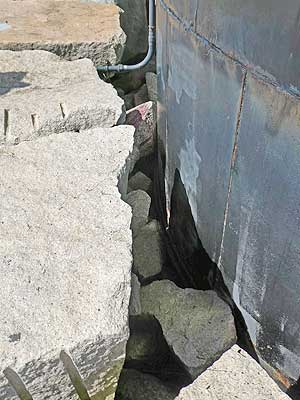
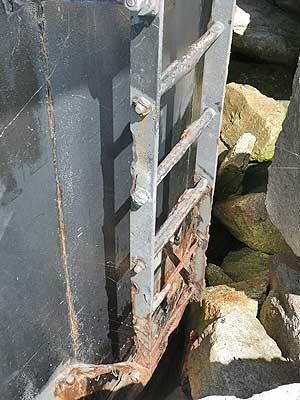
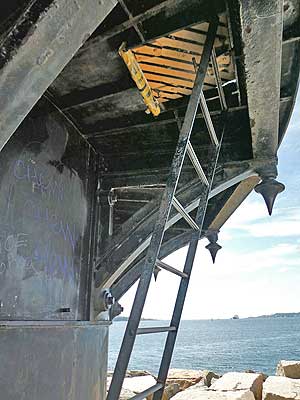
Caisson lighthouses (also called sparkplug lighthouses or bug lights) were developed in the late 1800's as a cheaper alternative to screwpile lighthouses. They were more efficient, sturdier and could withstand harsh weather. They were mostly made of cast iron. This is one of three sparkplug lights left in Maine.
The lighthouse was electrified in 1934 when an underwater cable was run out to it from Fort Preble. A kerosene-engine-driven generator was used for standby in case of a power failure on shore. The station was automated in 1960.
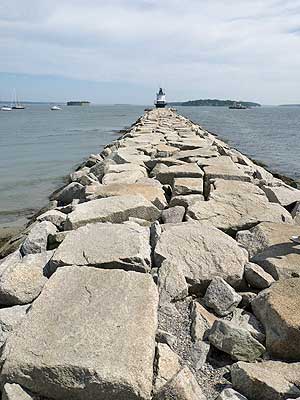 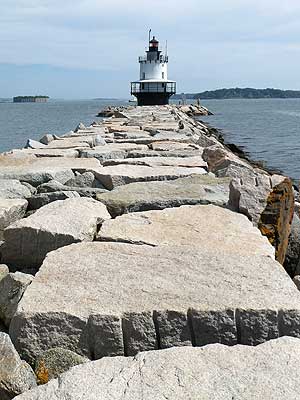
The 900-foot breakwater was built in 1951, using fifty thousand tons of granite blocks, each weighing between three and five tons.
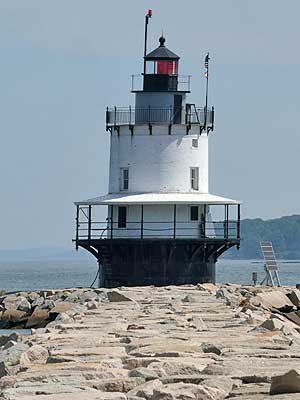 
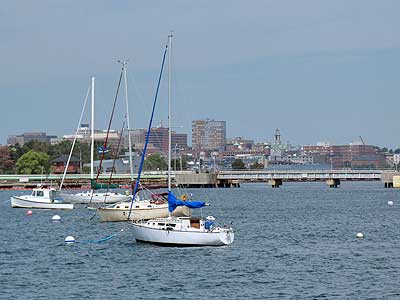 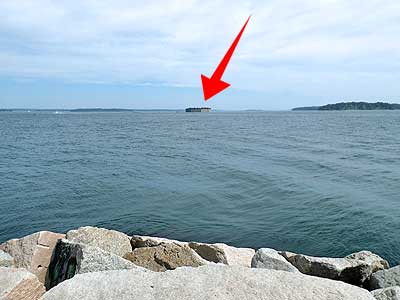
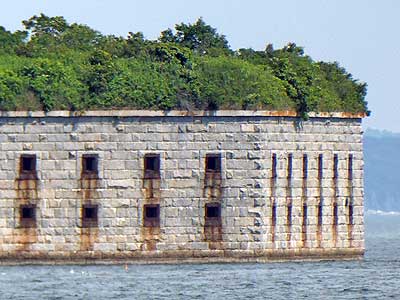
Downtown Portland ... Located some ways out in the water was Fort Gorges on Hog Island Ledge.
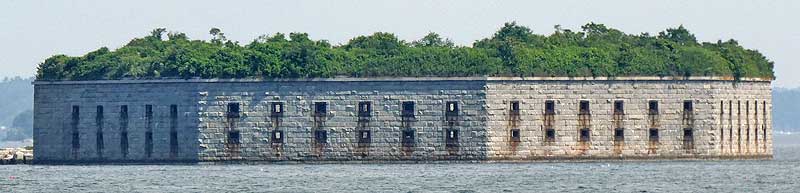
Fort Gorges was one of three forts in Portland Harbor (the others being Fort Prebel and Fort Scammel). But while both Preble and Scammel were completed in 1808 as part of the Second System of US fortifications, Fort Gorges was built as part of the Third System. Construction began in 1858 and the Civil war broke out in 1861. The chief architect was Thomas Lincoln Casey (also from Fort Knox). The D-shaped, two-story, enclosed fortress was constructed entirely with local granite and had 56 gun emplacements.
The fort was completed in 1865 as the war ended. However, it was already obsolete due to the advanced military technology developed during the Civil War, such as iron clad ships and long range guns. It saw no battles and no troops were ever stationed here. A modernization plan was begun in 1869 but funding was cut off in 1876, so the third level of the fort remains unfinished.
It was used as a storage facility for submarine mines in World War II, and in 1960 it was declared surplus property and given to the city of Portland.
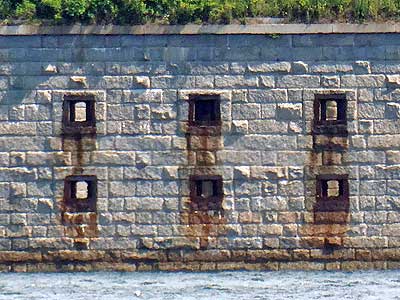 
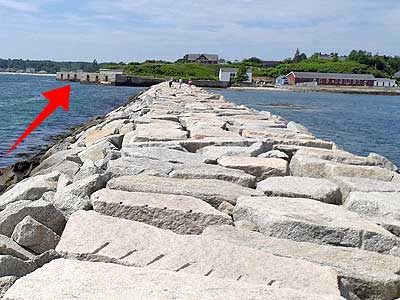
Walking back towards Fort Preble
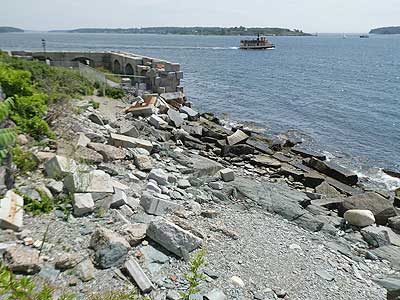 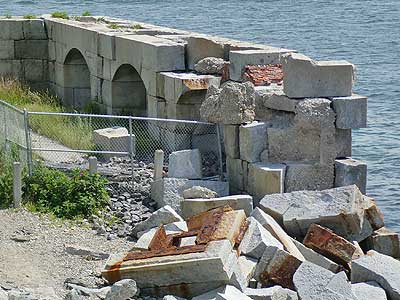
Another view of the fort from the land side
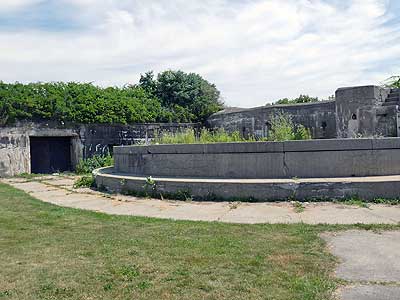 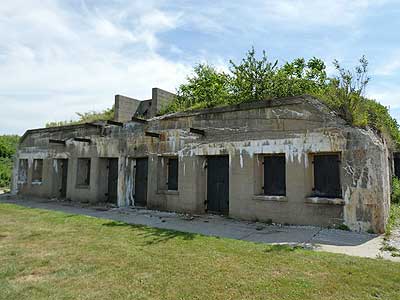
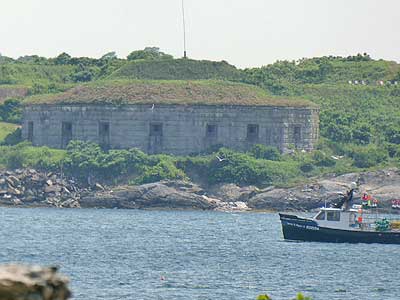
Across the way on House Island was Fort Scammel. Again Thomas Lincoln Casey oversaw its construction in 1808. It was later upgraded with larger cannons and an extensive network of underground concrete tunnels. By 1876, however, the Third System Coastal fortifications were deemed obsolete and defunded.
We headed over to nearby Fort William Park, home to both Fort Williams and the Portland Head Lighthouse.
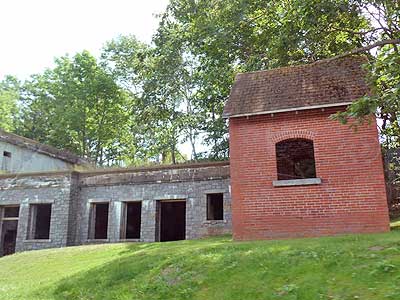 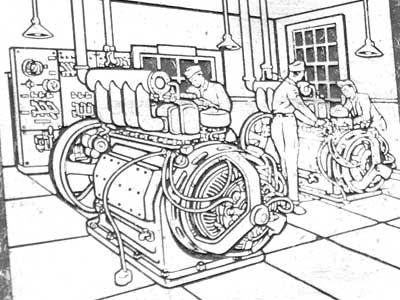
This building was completed in 1905 as the central powerhouse for Fort Williams. It was built of reinforced concrete in this sheltered location to protect it from attack. Inside, coal-fired boiler produced steam to turn generators.
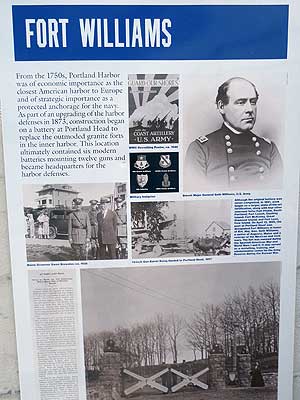 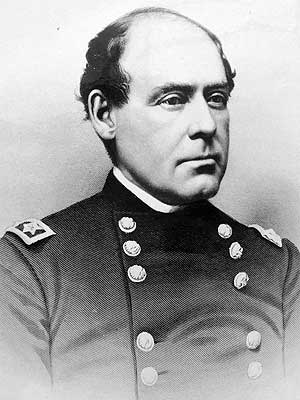
(right) Brevet Major General Seth Williams
From the 1750s, Portland Harbor was of economic importance as the closest US harbor to Europe. As part of upgrading harbor defenses in 1873, construction began at Portland Head to replace the outdated granite forts. In 1899, this location was selected for For Williams, in honor of Brevet Major General Seth Williams from Augusta, Maine. Ultimately there ended up being six modern artillery batteries with two guns each. The fort was manned during the Spanish-American War and both World Wars.
In 1930, a National Guard camp was set up here to practice anti-aircraft operations. In 1962, this was the last army post to close in Maine.
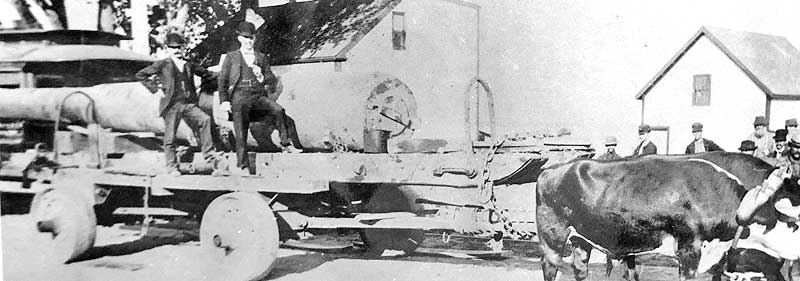
10-inch gun barrel being hauled to Portland Head, 1897
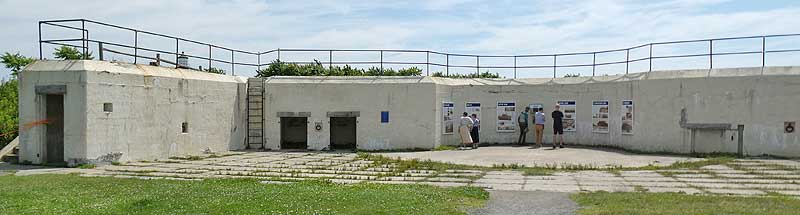
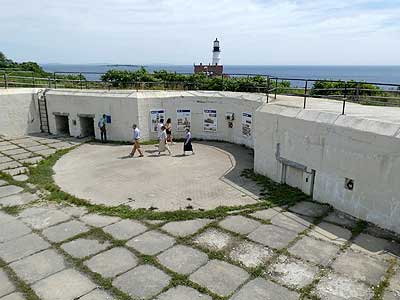
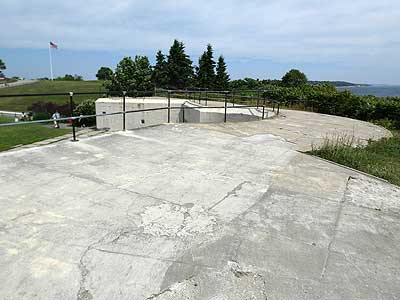
Battery Blair was the largest of six gun batteries built at Fort Williams. Named for Francis Preston Blair Jr(1821 - 1875) , a veteran of the Mexican and Civil wars, the battery was manned during WWI and the early years of WWII. Hidden from view at sea behind a large concrete and earth berm, it contained two 12-inch guns mounted on disappearing carriages. Designed to protect Portland Harbor from attacks by enemy battleships, these guns could fire a 1,000 pound armor-piercing shell a distance of 8 miles.
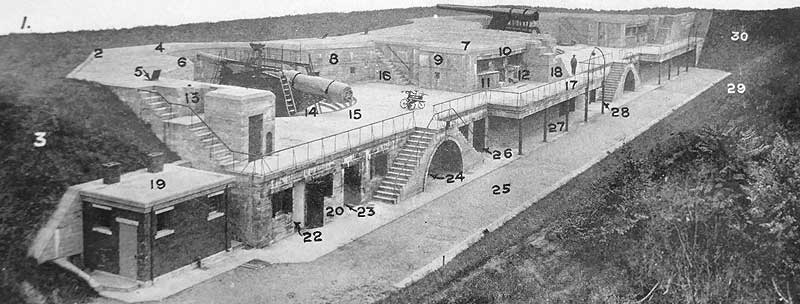
Seacoast gun batter,y circa 1910
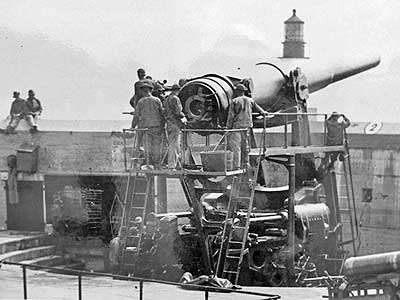 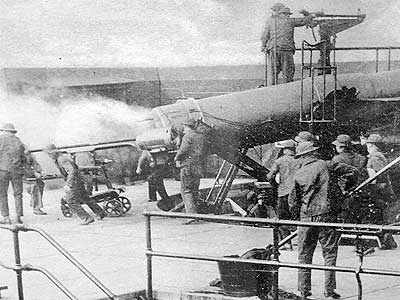
Photos from 1926 ... and 1910
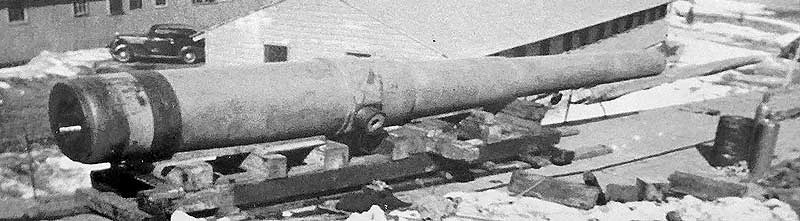
Removing a gun from Battery Blair, circa 1944
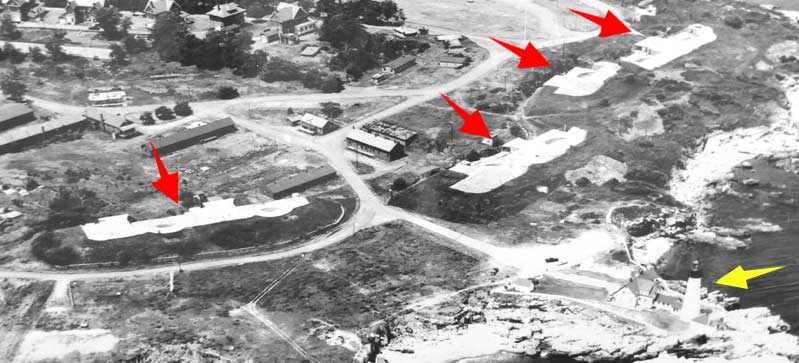
In 1964 after it had closed, with batteries (red) and lighthouse (yellow)
return • continue
|
|


